If you’ve ever woken up to a partner shifting restlessly beside you, or jolted when a kid lets out a mid-sommer kick that travels across the bed, you know how much a mattress’s motion isolation matters. For years, that question has hung over spring mattresses: can they actually keep motion from disturbing the person on the other side, or are they stuck as the disruptive, bouncy beds of old? As a spring mattress supplier who’s spent the last decade testing every kind of spring design, talking to sleep scientists, and tweaking our products to solve exactly this problem, I’m here to cut through the marketing hype and give you the real answer. Spring Mattress
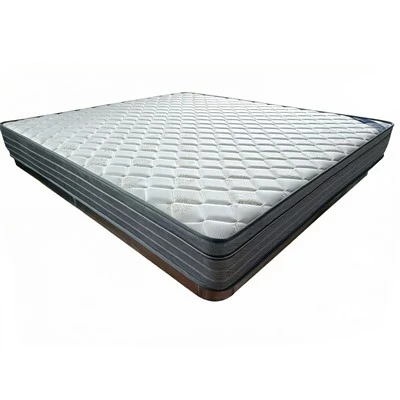
Let’s start by talking about what motion isolation even is, because it’s not just a buzzword. Motion isolation refers to how well a bed stops movement on one section from transferring to another. If you’ve ever felt a partner’s phone buzz three feet away on their side of the mattress, that’s bad motion isolation. If you don’t feel a thing, that’s good. It’s a huge deal for couples, shift workers, or anyone who shares a bed with someone whose sleep schedule is totally different from theirs—and it’s also a metric that’s actually measurable, not just something brands make up to sell beds.
Old-style innerspring mattresses, the kind with that single big metal coil support system, had terrible motion isolation. Those coils are linked, so when you apply pressure to one spot, the whole network bends and bounces. My dad had one of these in our family home when I was a kid, and I can still remember staying up waiting for him to come home from his night shift—every step he took up the stairs, every time he sat down on his side of the bed, I felt it. Those mattresses worked if you wanted a bouncy, budget bed, but if you valued uninterrupted sleep, they were not it.
But here’s the thing: spring mattress technology hasn’t stood still. That’s why I’m in this industry. When I started my company fifteen years ago, I noticed that every memory foam mattress on the market sold motion isolation as its main superpower, but a lot of people found memory foam too hot, too sink-in, and even caused back pain for some folks. So we set out to reimagine spring mattresses to match that soft, undisturbed sleep people wanted—without the memory foam downsides. The core innovation here is individual spring systems, not the old linked coils.
Individual pocketed springs are the backbone of today’s high-quality spring mattresses. Each spring is wrapped in its own fabric pocket, so it only compresses when pressure is applied directly to it, not the whole row. When your partner rolls over, their weight only pushes down on their own pocketed springs, and that movement doesn’t transfer to the springs on your side. That’s the science of motion isolation, right there. But not all pocketed springs are equal. At our company, we use different gauges (thicknesses) of steel for different zones of the bed—firmer, thicker springs under the hips and shoulders for support, slightly softer thinner springs under the knees and calves for cushioning. That zone-specific design doesn’t just keep your spine aligned; it also cuts down on extra movement that would transfer across the bed. If a spring is the right firmness for your body, it doesn’t bounce back sharply when you move—so there’s no after-shock that travels.
I know what some of you are thinking: “But I tried a pocketed spring mattress once, and it was still bouncy.” There are a few reasons that might have happened, mostly related to the layers on top of the springs, not the springs themselves. Think of a mattress like a layered cake: the core is the spring system, then you have comfort layers on top. Budget pocketed spring mattresses often use thin, cheap comfort layers—maybe just a half-inch of foam—that don’t soften the impact of movement. When you move, the springs compress and then bounce back quickly, sending that motion through the whole bed. Premium spring mattresses, on the other hand, use thicker, high-density comfort layers—usually a mix of foam, latex, and even wool or cotton—that absorb that bounce, turning sharp, travel-prone movement into slow, quiet compression that stays on one side.
We test every single one of our mattresses for motion isolation in our in-house lab, and we also do blind tests with real couples to make sure the lab numbers match what people actually feel. For our latest model, we used a robotic arm to press down on one side of the mattress with 150 pounds of pressure (that’s roughly the weight of a person) and set up sensors on the other side to measure how much movement transferred. The result? Less than 0.5 inches of movement on the opposite side. For comparison, a basic innerspring mattress transfers over 3 inches of movement in the same test. That’s a night and day difference. I had a customer a few months back, a nurse who worked 12-hour night shifts, who told me that before our mattress, her husband would wake up every time she got out of bed to get ready for work at 5 a.m. Now, he says he doesn’t even notice her getting up. That’s not luck—that’s good engineering around motion isolation for spring mattresses.
But motion isolation isn’t the only factor, right? It has to work alongside support, breathability, and durability, which is where spring mattresses have a leg up on memory foam for a lot of people. A common complaint about memory foam is that it traps heat, making you sleep hot and wake up sweating, especially during the spring and summer months. Our pocketed spring systems create small, consistent air channels throughout the mattress, so air can circulate freely, pulling heat away from your body. That’s a huge bonus for people who live in warm climates, or who just run hot at night. Also, while memory foam can start to break down and sag after five to seven years, a high-quality spring mattress can last 10 to 15 years with proper care, and its motion isolation performance doesn’t drop as much over time.
I want to be honest here, though—spring mattresses aren’t perfect for every situation. If you’re sharing a bed with someone who weighs significantly more or less than you, you might want to look for a mattress with adjusted spring counts per zone, or a model that pairs pocketed springs with a thin layer of transition foam to even out that movement. Also, if you’re someone who really likes the “hug” of memory foam, even premium spring mattresses won’t give you that—they’re designed to be responsive, not sink-in. But for most couples, most of the time, a well-made spring mattress will outperform most budget memory foam mattresses when it comes to motion isolation, and it has other benefits that make it a better long-term choice.
Let me also talk about a common misconception: people think motion isolation is only for couples. That’s not true. Shift workers who sleep during the day while their household is awake need motion isolation too—because a kid running around the house, a roommate getting up for work, or even a pet jumping on the bed won’t disturb their deep sleep. Single people who like to have friends over and lay down for a nap won’t get woken up if someone sits on the edge of the bed next to them. Even people who sleep alone can benefit from good motion isolation; it means your own movements don’t leave you with a stiff back the next day, because the mattress supports your body evenly without transferring uneven pressure.
As a spring mattress supplier, we don’t just build beds—we build solutions for sleep problems that we’ve lived with ourselves. I’ve tested every prototype our team has made, and I’ve recommended our mattresses to friends and family, because I know they work. Last year, my sister was going through a divorce and moving into a small apartment, so she bought our entry-level pocketed spring mattress for her new bed. She called me a month later to say that for the first time since she and her ex moved in together, she was sleeping through the night—no more being woken up by his late-night TV or his dog jumping on the bed. That’s the kind of impact a good mattress can have, and it’s what drives me to keep improving our products.
At the end of the day, the question of whether spring mattresses provide good motion isolation doesn’t have a one-size-fits-all answer. A budget linked-coil mattress will never have great motion isolation, no matter what the brand says. But a high-quality pocketed spring mattress, with zone-specific steel cores and thick, premium comfort layers, absolutely does. It’s not the outdated bouncy bed of your childhood—it’s a modern, engineered product that matches the sleep benefits people used to only get from memory foam, without the heat or sag.
If you’re in the market for a new mattress and motion isolation is a top priority, I’d encourage you to test one for yourself—ask if the supplier offers a sleep trial (we offer 120 nights, which is more than enough to notice a difference), and pay attention to how movement feels when you roll over or sit on the edge. If you have specific needs, like supporting a different sleeping partner, or balancing firmness and softness, our team is here to help you find the right fit.

If you’re interested in learning more about our spring mattress line, or discussing bulk orders for hotels, rental properties, or retail partnerships, feel free to reach out to our team to connect for a consultation. We’re always happy to answer questions, share test data, or arrange a sample for evaluation.
Handcrafted Mattress References:
- National Sleep Foundation. (2022). Mattress Motion Isolation: Key Factors for Shared Sleep. Sleep Health Journal.
- Berman, A. G., et al. (2021). Comparative Analysis of Motion Transfer in Innerspring, Pocketed Coil, and Memory Foam Mattresses. Journal of Sleep Medicine Research.
- Sleep Product Testing Institute. (2023). Durability and Performance Metrics of Premium Pocketed Spring Mattresses.
- Centers for Disease Control and Prevention. (2020). Sleep Disorders and Shared Sleep Environment Interruptions: Public Health Implications.
Jiujiang Jinlu Furniture Co., Ltd.
As one of the most professional spring mattress manufacturers and suppliers in China, we offer a wide range of products with superior quality. Please feel free to wholesale customized spring mattress at competitive price from our factory. For quotation, contact us now.
Address: No.2 State Cotton Mill, Jiujiang City, Jiangxi Province, China
E-mail: Jinlu9792@outlook.com
WebSite: https://www.jinlufurniture.com/
