If you’re in the electronics manufacturing space, you’ve probably come across 0.80mm pitch components more times than you realize—they’re in everything from consumer gadgets to industrial control boards, and as a supplier that focuses exclusively on this pitch, I get asked almost every week: “Is 0.80mm still a go-to, or is it on its way out?” Let me cut through the noise here, because the trends right now aren’t as cut and dried as you might think. A lot of folks assume smaller pitches (like 0.5mm or 0.4mm) are taking over, but the reality is 0.80mm is holding its own, and even seeing some quiet, important shifts that you won’t read about in generic tech blogs. 0.80mm Pitch
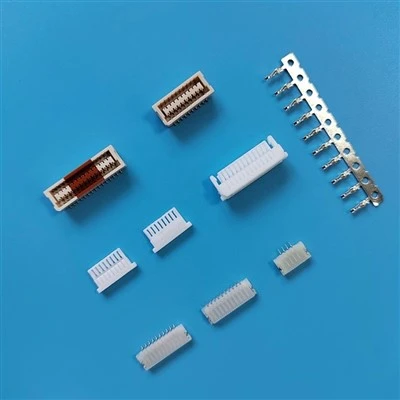
First, let’s get one thing straight: pitch size is all about balance. You don’t just pick the smallest pitch available because it sounds fancy—you have to match it to the application’s needs. 0.80mm hits a sweet spot that’s hard to beat, and that’s why it’s still one of the most widely specified pitches across multiple industries right now. But let’s break down the specific trends I’m seeing, both in my day-to-day working with design teams and on the manufacturing floor.
One of the biggest trends I’ve noticed over the last 18 months is a push for “ruggedization” in consumer and industrial electronics. A few years back, everyone was chasing thinner, lighter devices—so switching to smaller pitches made sense to cram more components onto a board. But lately, there’s been a backlash against flimsy gear that breaks after a few drops or temperature swings. Think about things like portable medical monitors, ruggedized IoT sensors for construction sites, or automotive infotainment modules that have to survive freezing winters and sweltering summers. These applications can’t risk tiny, fragile 0.5mm components that are prone to bent pins or solder joint failures. 0.80mm pitch components are just robust enough here: their pins are thicker, there’s more space between them, and solder joints have a larger surface area, so they hold up way better under stress. I’ve had three different clients this year move away from 0.5mm pitch designs back to 0.80mm specifically because their products were failing reliability tests in the field. That’s not a decline—that’s a reassertion of a proven sweet spot.
Another big trend is the rise of mid-volume, high-mix manufacturing. A lot of people talk about high-volume production (like smartphones or wireless earbuds) where standardized components rule, but the fastest growing segment right now is small to mid-batch runs—think custom industrial control units, medical device prototypes, and aerospace testing hardware. These teams don’t want to deal with the supply chain headaches that come with ultra-specific small-pitch parts. 0.80mm is a universal pitch, so you can get it from almost any supplier, it’s been around long enough that there’s no shortage of inventory, and it doesn’t require fancy, specialized pick-and-place machines to assemble. I’ve seen new clients who used to source smaller pitch parts switch to 0.80mm because they were waiting 6+ weeks for custom 0.4mm components, and their project deadlines were slipping. This flexibility is a huge win for 0.80mm—especially as more teams pivot from mass production to agile, customized product lines.
That said, it’s not all smooth sailing. There’s a clear trend in high-performance applications where 0.80mm is being edged out, but that’s not a bad thing for the pitch itself—it’s just a matter of specialization. For applications that need super high component density, like flagship smartphone logic boards or 5G base station modules, smaller pitches are still the way to go. But here’s the nuance: those designs are getting more complex, so even teams working with 0.5mm parts are realizing they need backup components, or pin-compatible parts to avoid supply chain bottlenecks. A lot of these teams are keeping 0.80mm in their bill of materials as a secondary option, just in case. I got a call last month from a big semiconductor design firm that wanted to stock 10k units of our 0.80mm pitch connectors specifically as a backup for their 0.5mm designs, in case their primary supplier had a production delay. That’s not a sign of 0.80mm being obsolete—it’s a sign of it being a reliable safety net that no one wants to lose.
I also want to talk about a trend that’s less talked about, but super important for our industry: environmental regulations. A lot of regions are phasing out leaded solder and pushing for more sustainable manufacturing practices, and 0.80mm is actually well-suited for this. Smaller pitches are way more sensitive to the thermal stress of lead-free soldering—too much heat, and you get cold joints; too little, and the pins don’t bond. 0.80mm has a larger pin footprint, so it’s more forgiving when manufacturers adjust their processes to meet RoHS and REACH standards. I’ve had clients tell me that switching to 0.80mm reduced their solder joint failure rates when they went lead-free by almost 20%—that’s a massive number for a manufacturing team. As regulations get stricter over the next few years, I expect this trend to pick up even more, because 0.80mm is one of the easiest pitches to work with when moving to eco-friendly materials.
Wait, but let’s address the elephant in the room: some people still say 0.80mm is dying. I get it—if you only follow high-volume consumer tech, you’re only seeing the small-pitch hype. But my job is to talk to a huge range of clients, from hobbyists prototyping their own IoT gadgets to Fortune 500 automotive companies, and 0.80mm is still showing up everywhere. Let’s take a quick example: last quarter, we shipped over 2.2 million units of 0.80mm pitch parts, and that’s up 12% from the same quarter last year. Compare that to 0.5mm pitch, which was up only 3% in that time. Smaller pitches are growing, but 0.80mm is growing faster in key segments, which tells me it’s not fading—it’s evolving to fit the new needs of manufacturing.
Another shift I’m seeing is in 0.80mm component design itself. A lot of people think all 0.80mm parts are the same, but that’s not true anymore. We’ve been working on tiny tweaks, like sturdier pin structures that can handle more thermal cycles, and smaller form factors that don’t take up extra board space, so you get the robustness of 0.80mm without the bulk. A lot of other suppliers are doing the same—no one wants to get left behind, so they’re adapting 0.80mm to be competitive even when density is a priority. This isn’t just “the same old parts”—it’s a whole new generation of 0.80mm components that can do more than ever before, which is why design teams are still choosing it.
So what does all this mean if you’re a design engineer, a procurement manager, or someone just getting into electronics manufacturing? It means 0.80mm pitch isn’t a relic—it’s a workhorse that’s still essential, and it’s getting even more important for specific markets. If you’re building a rugged device, or a mid-volume product, or you’re worried about supply chain reliability, 0.80mm should be on your shortlist. It’s not always the right choice—if you’re cramming 100 components onto a 1×1 inch board, smaller pitch is still better—but for most applications, it’s the sweet spot between performance, robustness, and flexibility.

At the end of the day, trends in pitch size always circle back to one thing: what works for the people building the products. Right now, 0.80mm works for way more teams than people give it credit for. If you’re looking for a reliable supplier of 0.80mm pitch components, or you just want to talk through what pitch makes sense for your next project, feel free to reach out. We work with everyone from small startups to large industrial teams, and we’ve got the inventory and expertise to fit your needs. Don’t sleep on 0.80mm—it’s still going strong, and it might be exactly what your next design needs.
2.50mm Pitch References
- IPC-7351B: Generic Requirements for Surface Mount Design and Land Pattern Standard
- 2024 Electronic Components Supply Chain Trends Report, Global Electronics Industry Association
- Rugged Electronics Reliability Testing Standards, Defense Logistics Agency
- RoHS 2 Compliance Requirements for Lead-Free Solder, European Commission
Dongguan Yinglian Electronics Co., Ltd.
We’re well-known as one of the most professional 0.80mm pitch suppliers in China. With abundant experience, we warmly welcome you to buy bulk advanced 0.80mm pitch made in China here from our factory. If you have any enquiry about cooperation, please feel free to email us.
Address:
E-mail: James@csg-china.com
WebSite: https://www.csgconn.com/
