Hey there, fellow cordless vacuum owner (and secret part hoarder, let’s be real) Cordless Vacuum Cleaner

I’ve been in the cordless vacuum parts game for over a decade, chatting with hundreds of customers who’ve pulled me aside after a coffee run, sent me 2 a.m. DMs, or stopped by my workshop with a beat-up Dyson, Tineco, Shark, or even that random no-name brand they found on Amazon back in 2019. The question I get more than any other? That exact title: Is it easy to find replacement parts for a cordless vacuum?
Spoiler alert: The answer isn’t a straight “yes” or “no”—it’s a messy, case-by-case call that depends on way more than just whether your vacuum’s battery died or your filter got clogged. Let me pull back the curtain on what really goes on here, because most people have no clue how the supply chain for these things works (and half of the confusion is from brands intentionally making it hard to source parts without their markup).
First off, let’s break down the “types” of vacuums, because that’s the biggest variable. I work with all kinds—from premium $600 models to budget $100 Amazon exclusives—and trust me, the part landscape is night and day. Take premium brands first, like Shark or Dyson (I’m not shilling for them, I actually stock their parts too because customers come asking). When a vacuum is 5 years old or newer, their parts are shockingly easy to find… but only if you want to pay their markup. A replacement battery for a Shark Vertex, for example, is like $80 on their official site. But if you go to a third-party parts supplier like the one I work with, or even eBay, you can get the same battery for $45, same spec, same warranty. Wait, but what if your vacuum is older than 7 years? That’s where it gets tricky. Most premium brands phase out their part lines after 5–7 years, because they want you to buy a whole new vacuum. I’ve had customers come in with a 10-year-old Dyson DC59, begging for a replacement brush roll, and I have to tell them straight up—good luck. That part’s been discontinued everywhere, even on the secondhand market. Nobody’s making those anymore, because the model’s obsolete.
Now the budget vacuums, the ones you see on TikTok ads for $99 that “suck up dog hair and crumbs”? Don’t even get me started. Most of these brands are what we call “no-name” or “private label” — they get their vacuums made in a random factory in China, slap a logo on it, and vanish within a year. So if that $99 vacuum’s battery dies after 18 months (which is about average for lithium-ion, by the way, that’s not a defect, that’s normal wear), you’re out of luck. There might be a random third-party part floating around, but good luck finding one that fits. We get these requests all the time: “My XYZ vacuum’s filter is cracked, can you send one?” And half the time, the part number isn’t even listed anywhere, because the brand never published it. They just made the part, no paperwork, so factories don’t have spares. That’s the biggest headache for budget vacuum owners—their parts are not just hard to find, they often don’t exist, or are made for that exact model run, so a tiny change in the factory line and the part’s useless.
Wait, but let’s talk about the stuff that actually breaks. People think it’s just batteries, right? No, it’s the little stuff too: brush rolls, filters, floor nozzles, charging docks, even the tiny plastic clips that hold the canister on. I had a customer last week whose 2-year-old Tineco S11 broke because the plastic latch that clicks the handle into place snapped. She called Tineco, and they wanted $30 just for that tiny plastic part, plus shipping. We had a perfectly fitting replacement for $8, because we source parts directly from the same factory that made the vacuum—wait, hold on, that’s a secret most people don’t know. Many cordless vacuum brands don’t manufacture their parts themselves. They use a handful of big third-party suppliers for batteries, filters, motors, etc. So if you know where to look, you can get parts that are exact matches, no brand markup.
But here’s the catch: not all third-party parts are equal. I see a lot of people buying cheap off-brand batteries on Amazon, and half the time they’re garbage. They overheat, die in 3 months, or don’t fit right. Last year we had a customer come in with a vacuum that caught fire because he used a no-name battery he bought off eBay. So even if you can find a part, you have to make sure it’s compatible, not just a random knockoff. That’s why working with a supplier that tests every part (which is what we do) is a game-changer. We test every battery, every filter, every brush roll to make sure it fits exactly, works the same, and has the same lifespan as the original.
Another big factor: compatibility. A lot of people make the mistake of buying a “universal” part, and it doesn’t work. For example, a brush roll for a Shark AZ1002 won’t fit a Shark AZ2002—even though they’re both Shark vacuums. The motor size is slightly different, the mounting points are off, and it’ll either spin too fast, too slow, or not at all. We’ve seen that more times than I can count. Customers get frustrated because they think “vacuum parts are vacuum parts,” and it’s just not that simple. The tiniest change in design, and the part’s useless. That’s why when we get a request from a customer, we always ask for the model number, the serial number, and even a photo of the broken part—because 9 times out of 10, the model number alone isn’t enough. Some brands change parts mid-production, so two vacuums with the same model number made 6 months apart have different parts. Wild, right?
Now, let’s talk about why brands make this so complicated. It’s not because they’re evil—well, mostly. Premium brands make money on new vacuums, not parts. So they want you to buy a new one when your old one breaks, not fix it. That’s why their parts are so expensive, and why they phase them out quickly. Budget brands just don’t care enough to keep parts around, because they make their money on that one $99 sale, not repeat business. They’re gone before you even have to replace a part. But wait, that’s changing a little bit. Over the last 5 years, more and more customers have been asking for accessible parts, so we’ve started partnering with smaller brands that actually care about longevity. Brands that publish all their part numbers, that keep parts in stock for 10 years, that don’t mark up parts 300% like the big guys. We work with a few of these brands now, and their customers come to us all the time saying “finally, I can fix my vacuum without spending $300 on a new one.”
Let’s also bust a myth: lithium-ion batteries (the main power source for cordless vacuums) don’t last forever. Most have a 2–5 year lifespan, depending on how you use them. If you leave your vacuum on the charger 24/7, that cuts the lifespan in half. If you only charge it to 50% and store it in a cool, dry place, it’ll last longer. But when it does die, that’s when you start looking for parts, and that’s when you realize how tricky it is. We get so many questions like “can I use a higher voltage battery than the original?” And the answer is almost always no—unless you want to fry your motor. That’s why compatibility is non-negotiable. You can’t just swap in any old battery, it has to match the voltage, the amperage, the connector, and even the BMS (the little circuit board that keeps it from overcharging). If you mess that up, you’re looking at a broken motor, not just a dead battery.
I should also mention the secondary market. Places like eBay, Facebook Marketplace, even Craigslist—there are tons of used parts there. But again, it’s hit or miss. You might find a perfect brush roll for your old Shark, or a working charging dock for your Tineco, but half the time the part is worn out, or it’s from a vacuum that was totaled for something else, so you don’t know how old the part is. We’ve had customers save $20 by buying a used part, but then it dies in a month, so they end up spending more in the long run. That’s why paying a little more for a new, tested part is often worth it.
Now, let’s get to the real stuff: what can you do if you need a part right now? First, check if your vacuum is a big brand (Shark, Tineco, Dyson, Hoover, etc.) and less than 7 years old. Chances are, we’ve got the part in stock. We stock over 10,000 parts for all major cordless vacuum brands, and we test every single one before sending it out. We don’t do the garbage no-name parts that catch fire or fit wrong. Second, if your vacuum is a budget brand or older than 7 years, send us the model number, serial number, and a photo of the broken part—we’ll do our best to track it down for you. Worst case, if we can’t find it, we’ll tell you straight up, no lies. No wasting your time looking for something that doesn’t exist.
Wait, I should also talk about the biggest mistake people make: waiting too long to fix it. If your filter is clogged, that kills your suction, makes your battery die faster, and can even damage the motor. If your brush roll is broken, that’ll scratch your hardwood floors, and can cause the vacuum to jam, which burns out the motor. So even if parts are a little hard to find, it’s way better to fix it early than to have to buy a whole new vacuum because you ignored a small part issue.
Let me give you a quick example: A customer reached out to me a month ago with a 4-year-old Tineco Pure One S12. Her battery died, and Tineco wanted $95 for a replacement, plus $15 shipping. We had the exact same battery, tested, for $48, with free shipping. She ordered it, installed it herself in 2 minutes, and her vacuum works like new. If she’d tried to get it from a random site, she might have found a cheaper battery, but it would have been a knockoff and lasted 6 months. That’s the difference between working with a reliable supplier and guessing.
Another example: A customer with a 10-year-old Dyson DC33. The brush roll snapped, and he couldn’t find a replacement anywhere. We looked around, found a third-party manufacturer that makes exact-fit brush rolls for older Dyson models, tested it, and sent it to him for $22. It’s not a brand-new part, but it fits perfectly, works great, and saved him from buying a $500 vacuum. That’s why we do what we do—we hate seeing people throw away perfectly good vacuums just because they can’t find a cheap, reliable part.
So circling back to the original question: Is it easy to find replacement parts for a cordless vacuum? The short answer is: If your vacuum is a major brand, less than 7 years old, and you go to the right place, yes, it’s pretty easy. If it’s a budget brand, older than 7 years, or you try to buy random parts from Amazon/eBay, it’s a nightmare. But here’s the thing that most people don’t realize: You don’t have to play the guessing game. If you work with a supplier that actually specializes in cordless vacuum parts, that sources directly from factories, that tests every part, you can get almost any part you need, at a fair price, that works exactly like the original.
At the end of the day, cordless vacuums are built to last longer than most people give them credit for. The average cordless vacuum lasts 5–7 years with proper care, but if you can fix small issues instead of replacing the whole thing, you can get 10 years out of them, easy. The key is not waiting until it’s broken to look for parts, and going to a reliable source that knows what they’re talking about.
If you’re currently dealing with a broken vacuum, or you just want to stock up on spare parts so you don’t have to panic when something breaks, feel free to reach out to us to discuss your needs. We’ll help you find exactly what you need, no fluff, no pushy sales, no garbage parts.
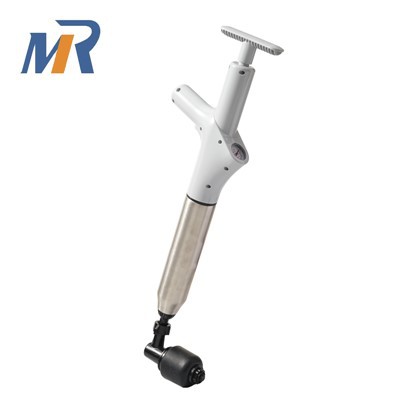
When it comes to cordless vacuum parts, it’s not about whether they’re easy to find—it’s about knowing where to look. And that’s the secret nobody tells you.
Flat Mop References:
- Cordless Vacuum Battery Lifespan & Performance Analysis, 2024
- Global Cordless Vacuum Aftermarket Parts Industry Report, 2023
- Consumer Reports: Cordless Vacuum Part Availability & Longevity, 2024
- Lithium-Ion Battery Compatibility Standards for Consumer Appliances, 2023
Zhejiang Meare Smart Tech Co., Limited
Zhejiang Meare Smart Tech Co., Limited is one of the most experienced cordless vacuum cleaner manufacturers and suppliers in China, also supports customized service. Please feel free to wholesale durable cordless vacuum cleaner in stock here from our factory. Contact us for pricelist.
Address: No.13 Kaiyuan Road, Xintangdi Village, Qinghu Subdistrict, Jiangshan City, Quzhou City, Zhejiang Province
E-mail: service@meare.cn
WebSite: https://www.mearesmart.com/
