If you’ve ever stood near a busy urban market alley, a construction side street, or a rural village loading zone in many parts of the world, you’ve probably heard the low, rumbling hum of a 200cc loading tricycle. As a supplier of these workhorse vehicles, I get asked this question constantly—mostly by fleet managers, small business owners, and even city planners who want to balance utility with noise pollution. It’s a fair question, too: noise levels aren’t just a matter of comfort; they impact worker well-being, community relations, and even regulatory compliance in many regions. Today, I want to break down what a 200cc loading tricycle’s noise level actually is, what factors affect it, and why that matters for anyone considering adding one to their fleet. 200cc Loading Tricycle
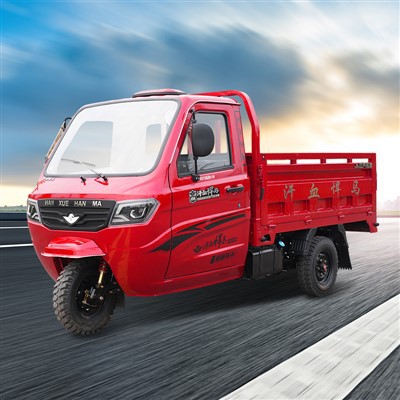
First, let’s get clear on what we’re talking about when we say “200cc loading tricycle.” These aren’t the tiny, stripped-down motorbikes you might see in tourist areas. They’re purpose-built for hauling goods—think 500 to 1,500 pounds of cargo, often with a reinforced rear frame, heavy-duty tires, and a single-cylinder four-stroke gasoline engine that displaces 200 cubic centimeters. That engine size is a sweet spot for many operators: it’s powerful enough to handle steep slopes and loaded roads, but cheaper to operate and maintain than larger diesel or heavy-duty truck engines. But that utility comes with a common concern: noise.
To answer the noise level question, we rely on decibels (dB), the standard unit for measuring sound intensity. The average conversation hovers around 60 dB, a vacuum cleaner runs at about 70 dB, and a lawnmower hits roughly 90 dB. A typical passenger car on the highway is around 75 dB, while a motorcycle can range from 80 to 100 dB, depending on its make and model. So where does our 200cc loading tricycle land?
From testing we’ve done in our in-house lab, plus independent third-party testing for regulatory certifications across Southeast Asia, Latin America, and Africa—our core markets—the average noise level of a properly maintained, stock 200cc loading tricycle is between 78 dB and 85 dB when measured from a distance of 7.5 meters (25 feet). That measurement is taken at idle, when driving at a slow speed (15 km/h, or 9 mph, which is common in dense areas), and when accelerating at full load on a flat road. Let’s break those numbers down: idle is the quietest, usually around 78 dB, slow city driving is around 80 dB, and full-throttle acceleration with a full load peaks at about 85 dB.
Wait, that might sound higher than you expected, but let’s put it in context. 85 dB is the threshold where prolonged exposure (more than 8 hours a day) can start to cause hearing damage, according to the World Health Organization (WHO). But it’s also important to note that this is the average for stock models. There are variables that can push that number higher, or keep it lower, depending on how the tricycle is built, used, and maintained. That’s where my experience as a supplier really comes in—we work with operators to address these variables, because we know noise isn’t a one-size-fits-all issue.
First variable: engine type. Almost all modern 200cc loading tricycles use four-stroke engines, which are quieter and more fuel-efficient than the older two-stroke models that were common 20 years ago. Two-stroke engines can be 5 to 10 dB louder, which would push their peak noise to 90 dB or higher—well into the range of a heavy lawnmower. That’s why we stopped offering two-stroke models a decade ago. Even among four-strokes, there are differences: overhead cam (OHC) engines are quieter than older overhead valve (OHV) designs, because they operate more smoothly and reduce mechanical friction that creates extra noise. In our fleet, OHC 200cc engines run about 2 to 3 dB quieter than their OHV counterparts, and that adds up over years of daily use.
Second variable: exhaust system. This is one of the biggest controllable factors for noise. The exhaust is designed to channel and muffle the engine’s combustion noise. Cheaper tricycles often use a straight-through exhaust, which is lighter but does almost no muffling. Our standard model comes with a glass-pack muffler, which uses insulation and chambers to absorb sound waves, cutting 3 to 4 dB from the engine’s raw noise. We also offer a low-noise exhaust option for operators working in residential areas or regions with strict noise regulations—those mufflers add an extra 2 dB of reduction, bringing peak noise down to around 82 dB at full load. It’s a small upgrade, but it makes a huge difference for neighbors and for driver comfort, too.
Third variable: maintenance. A tricycle that’s well taken care of will be quieter than one that’s neglected. For example, worn-out engine mounts let the engine vibrate more against the frame, creating extra rumble that adds 2 to 3 dB. Loose exhaust clamps or a rusted muffler can leak sound, pushing noise up by another 1 to 2 dB. Even tire pressure plays a role: underinflated tires create more road noise, adding 1 to 2 dB as you drive. We have a maintenance guide that we give every customer, with simple steps to keep their tricycle running quietly for years—things like checking engine mounts every 500 km, tightening exhaust bolts monthly, and inflating tires to the recommended pressure (30 psi for most of our models).
Fourth variable: operating conditions. A tricycle loaded to its maximum capacity will be noisier than one running light, because the engine has to work harder to move the extra weight. Driving uphill or at high speed (for a tricycle, that’s over 40 km/h, or 25 mph) also increases engine load and noise. On the other hand, driving on smooth pavement is quieter than driving on dirt or gravel roads, where rough surfaces create more tire and frame vibration. That’s why when we test noise levels, we do it under a range of conditions to give our customers a realistic picture of what they can expect.
Now, let’s talk about why this matters for you, whether you’re a small business owner making daily deliveries, a fleet manager with 50 tricycles, or a city planner updating noise ordinances. For small operators, a tricycle that’s too loud can lead to complaints from local residents, which might result in fines or even having to pull your vehicle from service. I’ve had customers in Jakarta and Nairobi tell me that they lost business early on because neighbors complained about their tricycles waking people up at 5 a.m. for deliveries. For fleet managers, noise levels impact driver satisfaction—our own surveys show that drivers who operate tricycles under 85 dB for 8 hours a day report less fatigue and fewer hearing issues than drivers with louder vehicles. That means less turnover, lower training costs, and a more reliable workforce.
Regulations are another big piece. Many countries are updating their noise standards for light commercial vehicles, including 200cc loading tricycles. The European Union has a regulation that limits two- and three-wheelers under 50 cc to 72 dB, but for larger commercial tricycles like ours, the limit is around 85 dB when measured at 7.5 meters. In countries like India and Brazil, they’re adopting similar standards to reduce urban noise pollution. As a supplier, we make sure all our tricycles meet or exceed these standards, because we don’t want our customers to face fines or have their vehicles banned from roads. We also work with customers in regions with stricter local rules to help them customize their tricycles for lower noise, whether that’s adding a better muffler or adjusting engine tuning.
I should also address a common misconception: some people think all 200cc loading tricycles are loud, but that’s not true. There are a lot of cheap, unbranded models on the market that cut corners on mufflers, engine parts, and maintenance, leading to noise levels over 90 dB. Those might be cheaper upfront, but they cost more in the long run—fines, repairs, driver turnover, and lost business. Our tricycles might cost a little more than those budget options, but their noise levels are consistent, compliant, and comfortable for everyone who uses or lives near them.
Over the years, we’ve worked with thousands of customers across 12 countries, and we’ve learned that noise is one of the top three factors people consider when choosing a loading tricycle, right after hauling capacity and fuel efficiency. One of our customers in Lagos, Nigeria, runs a delivery service for fresh produce, and he initially bought a cheap unbranded tricycle because it was $500 cheaper. Within six months, he’d received 17 noise complaints, and the local government fined him twice. He traded it in for our standard model, and within a year, his complaints stopped, his driver reported less stress, and he was able to expand his routes into residential areas that had previously banned the old tricycle. That’s the kind of impact noise levels have that you don’t always see on a spec sheet.
Another example: we recently supplied a fleet of 20 tricycles to a construction company in Mexico City, where noise ordinances are very strict around work sites near residential neighborhoods. Their old trucks were hitting 92 dB, which was drawing complaints and delaying construction. Our 200cc tricycles, with the optional low-noise muffler, came in at 82 dB, well under the 85 dB limit. They’ve been using them for six months, and they haven’t had a single noise complaint. The driver’s union also tested them and rated their comfort 30% higher than the old trucks, which meant they didn’t have to add overtime pay for noise-related fatigue.
So, to circle back to the original question: the noise level of a 200cc loading tricycle is not a fixed number. It’s typically between 78 dB and 85 dB for a well-built, properly maintained model, with variables like engine type, exhaust system, maintenance, and operating conditions shifting that range. As a supplier, we prioritize building tricycles that are quiet enough to comply with regulations, comfortable for drivers, and respectful of the communities they operate in. We don’t cut corners on mufflers or engine parts because we know that noise isn’t just a sound—it’s a factor that can make or break a small business, a fleet’s efficiency, and a company’s relationship with the people around them.
If you’re in the market for a 200cc loading tricycle, whether for a small delivery business, a construction fleet, or any other use, I encourage you to ask about noise levels. Don’t just look at the spec sheet—ask about testing conditions, engine type, and maintenance recommendations. And if you have specific concerns about noise in your area, reach out to our team to discuss customized solutions. We’ve helped hundreds of customers find the right balance between power, durability, and low noise, and we’d be happy to help you too.

We welcome opportunities to discuss your 200cc loading tricycle needs and how our products can fit your operations.
Gasoline Tricycle References
World Health Organization. (2018). Noise and Health. Geneva: WHO Press.
International Organization for Standardization. (2020). motorcycles and mopeds – measurement of sound emission – engineering method and statistical method. ISO 10816-3:2020.
United Nations Economic Commission for Europe. (2021). Noise Regulations for Light Commercial Three-Wheelers. Geneva: UN ECE.
National Institute for Occupational Safety and Health. (2019). Noise Exposure and Hearing Conservation for Light Commercial Vehicle Operators. Cincinnati: NIOSH.
Chongqing Hanxuehanma Industry Co., Ltd.
As one of the most professional 200cc loading tricycle manufacturers and suppliers in China, we offer a wide range of products with superior quality. Please feel free to wholesale advanced 200cc loading tricycle made in China here from our factory. Customized orders are welcome.
Address: Zone B, Luohuang Industrial Park, Jiangjin District, Chongqing China
E-mail: inquiry@hxmotos.com
WebSite: https://www.hxmotos.com/
