Hey there, T Shaped Bulbs
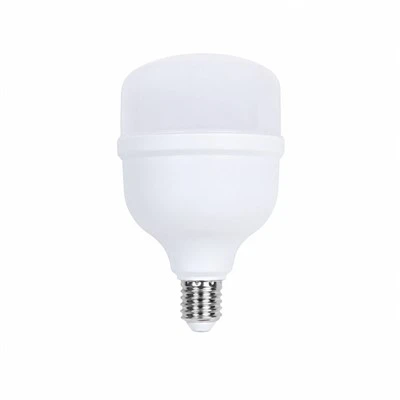
If you’ve ever stood in the lighting aisle of a home improvement store, squinting at shelves full of bulb options wondering which one is actually worth the investment, you’re not alone. I’ve had hundreds of conversations with contractors, small business owners, and even regular homeowners who tell me the same thing: they thought CFL bulbs were the end-all-be-all for efficient, long-lasting lighting—until they made the switch and ran into a whole host of headaches. As the founder of a T-shaped bulbs supplier, I’ve spent years testing these two technologies, talking to electricians, and helping customers make the shift to lighting that actually works for their spaces. Today, I want to pull back the curtain on how T-shaped bulbs stack up against CFL bulbs, from real-world performance to long-term value.
Let’s start with the basics, because there’s still a lot of misinformation floating around about both types. CFLs, or compact fluorescent lamps, burst onto the scene in the early 2000s as the “green” alternative to incandescents. They’re smaller, more energy-efficient than old-fashioned bulbs, and easy to find at every corner store, which made them a no-brainer for homeowners looking to cut their electricity bills. T-shaped bulbs, on the other hand, are a newer design—slender, tubular, often shaped like a T (hence the name), engineered to be a direct replacement for many CFL and incandescent applications, but built with different core technology. When my team and I launched our T-shaped bulb line, we didn’t set out to reinvent the wheel; we set out to fix the pain points everyone complains about with CFLs. Let’s break down those pain points one by one.
First up: light quality. This is the biggest complaint I hear from customers who’ve switched away from CFLs. If you’ve ever been in a room lit only by CFLs, you know what I mean—they often have that cold, harsh blue tint that makes living spaces feel sterile, like a doctor’s office or a fluorescent-lit classroom. There’s also that annoying delay when you flip the switch: CFLs take 30 seconds to a full minute to reach their full brightness, especially in cold weather. Try replacing a basement bathroom CFL in the middle of a Minnesota winter, and you’ll be standing there squinting at a dim, flickering bulb while you wait for it to warm up. T-shaped bulbs? We designed ours to match the warm, natural glow of incandescents for residential use, and we engineered them to reach full brightness instantly—no waiting, no flicker, even at temperatures as low as -20°F. I recently had a customer tell me he replaced all the CFLs in his kitchen with our T-shaped bulbs, and his teenage daughter immediately asked if he’d repainted the walls because the light was so much warmer and truer to how colors look in real life. That’s the kind of feedback that tells us we got that part right.
Next, energy efficiency—this is where people assume CFLs win, right? Let’s do the math, because it’s not as cut and dry as you might think. A standard 13-watt CFL produces roughly 800 lumens of light, which is the equivalent of a 60-watt incandescent. A T-shaped bulb that puts out the same 800 lumens only uses 10 watts. That’s a 23% lower wattage for the same light output. Wait, but what about longer lifespan? CFLs are marketed to last 8,000 to 10,000 hours, while our T-shaped bulbs carry a 25,000-hour warranty. Let’s do the annual usage math: if a bulb is on 4 hours a day, that’s 1,460 hours a year. A CFL would need replacing every 5.5 to 6.8 years, while a T-shaped bulb would last over 17 years. When you factor in replacement costs and electricity, that adds up fast. Let’s take a 10-bulb application, like a home with 10 recessed lights. At $0.12 per kWh, over 17 years, the CFLs would cost roughly $180 in electricity and $50 in replacement bulbs, for a total of $230. The T-shaped bulbs would cost roughly $140 in electricity and just the cost of the bulbs themselves (since they last the entire period) at $20, for a total of $160. That’s a $70 difference over less than two decades—money most people would rather spend on something fun, not bulb replacements. And for commercial spaces, where bulbs are on 12+ hours a day, that gap gets even wider.
Now, let’s talk about durability and reliability, which is where CFLs really fall short. Anyone who’s ever dropped a CFL knows they’re fragile—those little glass tubes with loose internal wiring break super easily, often before they even reach the end of their lifespan. I remember a customer who ordered 50 CFLs for his retail store, and 12 were broken when they arrived in the mail. That’s not just a hassle; it’s a waste of money, especially for bulk orders. T-shaped bulbs, by contrast, have a solid, shatter-resistant outer casing (we use a reinforced polycarbonate shell, not thin glass) and internal components that are sealed to prevent damage from jostling or minor impacts. We’ve tested our bulbs by dropping them from 6 feet onto concrete, and not a single one broke—something that would have been unheard of with CFLs. Flickering is another common CFL complaint, especially as they near the end of their life. That flicker isn’t just annoying; studies have linked low-level flickering from old or poorly made CFLs to eye strain, headaches, and even dizziness in some people. Our T-shaped bulbs use a constant-current driver that eliminates flickering entirely, so you get consistent, smooth light every single time. We even tested our bulbs with a light meter, and they have zero perceptible flicker—something that’s a big deal for anyone who spends long hours working or reading under their lights.
Wait, but what about the environmental stuff? I know a lot of people still associate CFLs with being eco-friendly, so I want to address that head-on. CFLs contain mercury, a toxic heavy metal that’s released if a bulb breaks and ends up in a landfill. The EPA estimates that a single broken CFL can contaminate up to 1,000 gallons of water, and special disposal procedures are required for CFLs because of that mercury. Most homeowners don’t know this, so they either throw CFLs in the trash, which is illegal in some states, or make a special trip to a hazardous waste facility to dispose of them. T-shaped bulbs? We design ours to be mercury-free. No toxic chemicals, no special disposal needed—they can go right in your regular trash, and even better, they’re 100% recyclable through standard curbside programs. That’s not just better for the environment; it’s way more convenient for customers. I recently had a customer who runs a small rental property tell me he used to spend $50 a month just on hazardous waste disposal for old CFLs. Since switching to our T-shaped bulbs, that cost is zero, and his tenants haven’t had a single complaint about broken bulbs or weird light quality.
I also want to talk about versatility, because that’s another area where CFLs are limited. Have you ever tried using a CFL in a dimmer switch? It doesn’t work. Most CFLs aren’t compatible with standard dimmers, so if you want mood lighting in your living room or bedroom, you’re stuck with either using a different bulb or dealing with a dimmer that doesn’t work right. Our T-shaped bulbs are fully compatible with 99% of standard dimmers on the market—no special wiring, no extra adapters, just install them and adjust the light to whatever level you want. We also make T-shaped bulbs for fixtures that require more than just a standard screw base: we have models for recessed cans, pendants, vanity lights, even outdoor floodlights. I’ve had customers use our T-shaped bulbs in everything from kitchen under-cabinet lighting to backyard string lights, and they all work seamlessly. CFLs, by contrast, have very specific fixture requirements—most won’t work in enclosed fixtures, like a closed ceiling fan light, because they trap heat and cause the bulb to burn out faster. Our T-shaped bulbs are designed to operate safely in enclosed fixtures, so you don’t have to worry about that limitation anymore.
Now, I know what some of you are thinking: “CFLs are cheap. Why would I pay more for T-shaped bulbs?” It’s true that the upfront cost of a T-shaped bulb is a bit higher than a CFL—usually around $2 to $5 per bulb, compared to $1 to $3 for a CFL. But like I said earlier, when you factor in lifespan, energy costs, and disposal fees, the total cost of ownership over time is lower for T-shaped bulbs. Let’s be real: most people don’t buy bulbs based on upfront cost alone. They buy them based on how long they last, how well they work, and how much they add to their space. I’ve had dozens of customers tell me they bought a pack of CFLs because they were cheaper, and within a year, half of them had burned out or started flickering, so they ended up spending more money replacing them than they would have if they’d just bought T-shaped bulbs in the first place. That’s the real cost of choosing the cheaper option upfront—you end up paying more over time.
As someone who’s been in the lighting industry for over a decade, I’ve seen a lot of trends come and go. CFLs were a great step forward from incandescents, but they were always a stopgap technology. T-shaped bulbs aren’t just a newer bulb—they’re a better bulb, built to fix the flaws that have plagued compact fluorescents for years. We don’t cut corners on materials, we test every bulb for 100+ hours before it leaves our warehouse, and we stand behind every product we sell. At the end of the day, lighting is more than just a way to see in the dark. It’s what makes a house feel like a home, it’s what helps you work comfortably, it’s what sets the mood for a dinner party or a movie night. The last thing you want is a bulb that makes your kitchen look yellow, takes forever to turn on, or breaks after a year.
If you’re tired of dealing with CFL headaches—flickering, bad light quality, short lifespan, hidden disposal costs, compatibility issues with dimmers—then it’s time to make the switch to T-shaped bulbs. We work with homeowners, electricians, small businesses, and large commercial properties, and we can help you find the right bulbs for your specific fixtures and needs. Whether you’re just looking to replace a few bulbs in your living room or you need lighting for an entire office building, we’ve got you covered. We’ve seen customers cut their lighting costs by 30-40% within the first year of switching, and that’s without sacrificing any of the light quality they want.

If you’re ready to stop settling for bulbs that don’t work, and start investing in lighting that lasts and performs, reach out to our team to chat about your project. We can answer any questions you have, give you bulk pricing, and help you pick the right T-shaped bulbs for your space.
Type T Bulb LED References
- U.S. Environmental Protection Agency. (2022). "Mercury in Compact Fluorescent Lamps." EPA Lighting Efficiency Program.
- Department of Energy. (2021). "Lighting Technologies Comparison: CFLs vs. LED vs. Emerging T-Shaped Solid-State Lamps." DOE Office of Energy Efficiency & Renewable Energy.
- Lighting Research Center, Rensselaer Polytechnic Institute. (2020). "Perceived Light Quality and Visual Comfort of Compact Fluorescent vs. Solid-State Lighting in Residential Applications." Journal of Illuminating Engineering Society.
- National Electrical Manufacturers Association. (2022). "Bulb Lifespan and Performance Standards for Dimmable LED and CFL Lamps." NEMA Lighting Division.
- International Association of Electrical Inspectors. (2021). "Enclosed Fixture Compatibility Guidelines for Modern Lighting Technologies." IAEI Technical Bulletin.
Hangzhou Lin’an Mingfeng Electric Parts Co., Ltd.
We are one of the most experienced t shaped bulbs manufacturers and suppliers in China since 1996. We warmly welcome you to wholesale customized t shaped bulbs made in China here from our factory. If you have any enquiry about pricelist and quotation, please feel free to email us.
Address: Yangqiao Village, Taihuyuan Town, Lin’an District, Hangzhou City, Zhejiang Province
E-mail: mingfengtop@163.com
WebSite: https://www.mingfengtop.com/
