Hey there! As a supplier of lab chairs, one question I get asked a ton is, "Do lab chairs have wheels?" Well, let’s dive right into this topic and break it down. Lab Chair
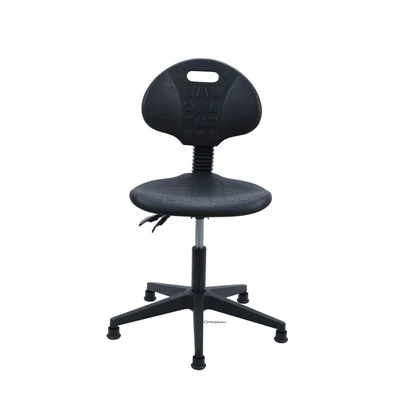
First off, the answer is not a simple yes or no. A lot of lab chairs do come with wheels, and there are some solid reasons for that. In a lab setting, mobility is key. Scientists, researchers, and lab technicians are constantly on the move. They need to be able to quickly shift from one workstation to another, reach for equipment, or collaborate with colleagues across the room. Wheels on lab chairs make this movement a whole lot easier.
Imagine you’re working on a complex experiment. You’ve got samples on one side of the bench and a microscope on the other. Without a chair with wheels, you’d have to keep standing up and sitting down, which can be not only time – consuming but also a bit of a pain in the long run. With a wheeled lab chair, you can just roll over to the microscope, take a look at your samples, and then roll back to your workstation to record your findings. It’s that simple and efficient.
Another advantage of having wheels on lab chairs is ergonomics. When you can move around easily in your chair, you’re less likely to stay in one position for too long. Staying in a fixed position for extended periods can lead to all sorts of problems, like back pain, neck strain, and poor circulation. By being able to roll around, you can adjust your position frequently, which helps keep your body more comfortable and healthy.
But it’s not all rosy. There are also some situations where wheels might not be the best option. In some high – precision labs, even the slightest movement can affect experiments. For example, in a lab where they’re working on nanotechnology or extremely delicate biological samples, the vibrations caused by rolling the chair can disrupt the work. In these cases, a stationary chair might be a better choice.
Also, in labs with uneven floors or lots of obstacles, wheels can be a hassle. They might get stuck in small gaps, or it can be difficult to move the chair smoothly. And if the lab is a bit crowded, the wheels can make it easy to accidentally bump into things or knock over equipment.
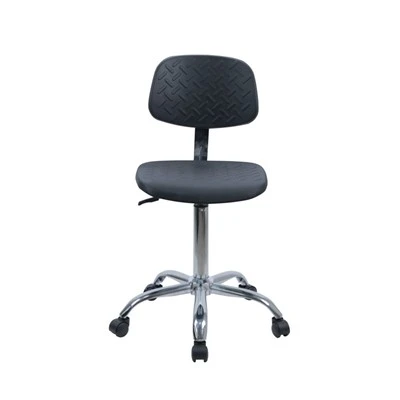
Now, let’s talk about the types of wheels you might find on lab chairs. There are different materials and designs available. The most common ones are made of rubber or polyurethane. Rubber wheels are great because they’re soft and provide good traction. They also tend to be quieter, which is important in a lab environment where you don’t want a lot of noise distractions. Polyurethane wheels, on the other hand, are more durable and resistant to chemicals. They’re a good choice for labs where there’s a risk of spills or exposure to various substances.
Some lab chairs come with locking wheels. This is a really handy feature. You can lock the wheels when you need to stay in one place, like when you’re doing some detailed work that requires stability. And when you’re ready to move around, you just unlock them. It gives you the best of both worlds – mobility and stability.
As a lab chair supplier, I’ve seen a wide range of customer preferences. Some customers are really insistent on having wheels because of the mobility factor. They want their lab staff to be able to move around as freely as possible. Others are more concerned about the precision of their experiments and opt for stationary chairs. And then there are those who go for the chairs with locking wheels, which offer a bit of flexibility.
We also offer customization options for our lab chairs. If a customer wants a specific type of wheel or a particular feature related to the wheels, we can usually work it out. For example, if a lab has a unique floor surface, we can recommend the best type of wheel that will work well on it.
When it comes to maintenance, wheels on lab chairs do need some attention. Over time, the wheels can get dirty, and the bearings might wear out. Regular cleaning can help keep the wheels in good working condition. You can use a mild detergent to clean the wheels and make sure to dry them properly. And if the bearings start to make noise or the wheels don’t roll smoothly, it might be time to replace them.
In the end, whether a lab chair should have wheels or not depends on the specific needs of the lab. It’s all about finding the right balance between mobility and stability. If you’re running a lab and you’re in the market for new chairs, it’s a good idea to think about how your staff will be using the chairs. Consider the layout of your lab, the nature of your work, and your budget.
If you’re interested in learning more about our lab chairs, whether you’re thinking about wheeled chairs or stationary ones, I’d love to have a chat with you. We’ve got a wide range of options to suit different lab requirements. Just reach out, and we can discuss your needs in more detail. Whether you’re a small research lab or a large industrial facility, we’ve got something for you.
ESD Chairs References:
- General knowledge from years of experience in the lab chair supply industry.
- Conversations with lab technicians, scientists, and researchers over the years.
Mingqi Anti-Static Technology (Dongguan) Co., Ltd.
Mingqi Anti-Static Technology (Dongguan) Co., Ltd. is one of the most professional lab chair manufacturers and suppliers in China, featured by quality products and good price. Welcome to buy durable lab chair for sale here and get quotation from our factory. We also accept customized orders.
Address: Room 103, Building 2, No.5, Chuangye Road, Gaobu Town, Dongguan City, Guangdong Province
E-mail: qiuhaiyang94@gmail.com
WebSite: https://www.mingqiesdchair.com/
