As a seasoned provider of mixing and blending equipment, I’ve witnessed firsthand the challenges that come with handling sticky materials. Sticky substances, whether they’re adhesives, doughs, or certain chemical compounds, present unique mixing requirements. One piece of equipment that has proven to be highly effective in these scenarios is the helical-ribbon mixer. In this blog, I’ll delve into the workings of a helical-ribbon mixer and how it addresses the complexities of mixing and blending sticky materials. Mixing and Blending Equipment

Understanding the Basics of a Helical – Ribbon Mixer
At its core, a helical-ribbon mixer consists of a cylindrical trough or vessel and a helical-ribbon agitator. The trough is usually horizontal, providing a stable base for the mixing process. The agitator, which is the heart of the mixer, is designed in a helical or spiral shape. This spiral ribbon can either be single or double, depending on the specific requirements of the mixing task.
The helical-ribbon agitator rotates within the trough, creating a complex flow pattern that is crucial for effective mixing. The direction of rotation and the pitch of the helix determine the movement of the material within the mixer. In most cases, the rotation of the ribbon causes the material to move both axially (along the length of the trough) and radially (towards the center or the walls of the trough).
Why Sticky Materials are Challenging to Mix
Sticky materials have high viscosity and cohesive forces between their particles. This means they tend to stick together and adhere to the surfaces of the mixing equipment. As a result, traditional mixing methods may not be sufficient to achieve a uniform blend. For example, simple paddle mixers may struggle to break up large clumps of sticky materials or distribute additives evenly throughout the mixture.
Moreover, sticky materials can cause buildup on the mixer’s interior surfaces, such as the walls of the trough and the agitator itself. This buildup can lead to reduced mixing efficiency over time, as well as increased cleaning requirements. In some cases, the buildup can even damage the equipment if not addressed promptly.
How a Helical – Ribbon Mixer Overcomes Sticky Material Challenges
Axial and Radial Movement
The helical-ribbon agitator creates a unique flow pattern that effectively tackles the challenges of sticky materials. As the ribbon rotates, it moves the material axially along the length of the trough. This axial movement ensures that all parts of the material come into contact with different areas of the mixer, helping to break up large clumps and promote more even mixing.
Simultaneously, the radial movement created by the ribbon pushes the material towards the center and the walls of the trough. This radial flow helps to distribute additives more evenly throughout the mixture, as it brings the outer layers of the material into contact with the center and vice versa. The combination of axial and radial movement creates a thorough and efficient mixing action that is particularly effective for sticky materials.
Scraping Action
One of the key features of a helical-ribbon mixer is its scraping action. The outer edge of the ribbon is usually designed to be close to the walls of the trough. As the ribbon rotates, it scrapes the walls, preventing the buildup of sticky materials. This scraping action not only helps to maintain the efficiency of the mixing process but also reduces the need for frequent cleaning.
In addition to scraping the walls, the inner ribbon (in a double-ribbon mixer) can also scrape the outer ribbon, further preventing material buildup and ensuring a continuous and smooth mixing process. This self-cleaning mechanism is a significant advantage when dealing with sticky materials, as it minimizes downtime and maintenance requirements.
Customization for Sticky Materials
Helical-ribbon mixers can be customized to suit the specific properties of different sticky materials. For example, the pitch of the helix can be adjusted to control the speed and direction of the material flow. A steeper pitch may be used for materials that require a faster mixing speed, while a shallower pitch can be more suitable for materials that need a gentler blending action.
The speed of the agitator can also be adjusted to optimize the mixing process. For very sticky materials, a slower speed may be required to prevent excessive shear forces that could damage the material’s structure. On the other hand, less sticky materials may benefit from a higher speed to achieve a more rapid and thorough mix.
Factors Affecting the Performance of a Helical – Ribbon Mixer with Sticky Materials
Material Properties
The properties of the sticky material, such as its viscosity, density, and particle size, have a significant impact on the performance of the helical-ribbon mixer. Higher viscosity materials generally require more mixing time and a slower agitator speed to ensure a uniform blend. The density of the material can also affect the power required by the mixer and the efficiency of the mixing process. Materials with larger particle sizes may need more aggressive mixing to break up the particles and distribute them evenly.
Loading Capacity
The amount of material loaded into the mixer is another important factor. Overloading the mixer can lead to poor mixing efficiency, as the ribbon may not be able to move the material effectively. On the other hand, underloading the mixer can also result in inefficient use of energy and longer mixing times. It’s essential to determine the optimal loading capacity based on the specific characteristics of the sticky material and the design of the helical-ribbon mixer.
Mixing Time
The mixing time required for sticky materials depends on several factors, including the type of material, the degree of blending required, and the performance of the mixer. In some cases, it may take several minutes or even hours to achieve a satisfactory blend. It’s important to monitor the mixing process and conduct appropriate tests to determine the optimal mixing time for each batch of material.
Benefits of Using a Helical – Ribbon Mixer for Sticky Materials
Uniform Mixing
The helical-ribbon mixer’s unique flow pattern and scraping action ensure a high degree of uniformity in the mixture. This is crucial for applications where consistent product quality is required, such as in the food, pharmaceutical, and chemical industries. Whether you’re mixing ingredients for a batch of adhesive or blending dough for baking, the helical-ribbon mixer can deliver a homogeneous product.
Reduced Maintenance
The self-cleaning feature of the helical-ribbon mixer reduces the amount of material buildup on the equipment’s surfaces. This not only improves the mixing efficiency but also extends the lifespan of the mixer. With less frequent cleaning and maintenance, you can save time and money in the long run.
Versatility
Helical-ribbon mixers can handle a wide range of sticky materials, from highly viscous pastes to semi-solid substances. They can also be used for both batch and continuous mixing processes, making them a versatile choice for various industries. Whether you’re a small-scale producer or a large manufacturing plant, a helical-ribbon mixer can meet your mixing needs.
Conclusion and Call to Action
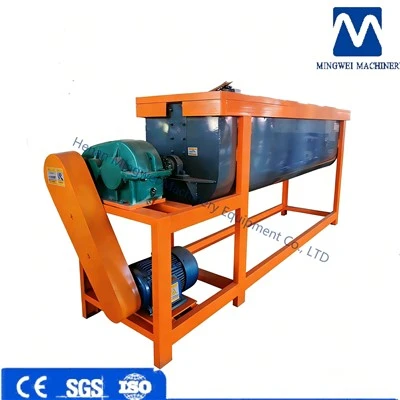
In conclusion, a helical-ribbon mixer is a powerful and effective tool for mixing and blending sticky materials. Its unique design and functionality address the challenges posed by high – viscosity and cohesive substances, ensuring a uniform blend and minimizing maintenance requirements.
Granulation Machines If you’re in the market for a reliable mixing and blending solution for your sticky materials, I invite you to reach out to us. We have a team of experts who can help you select the right helical-ribbon mixer for your specific requirements. Whether you need a custom – designed mixer or a standard model, we’re here to assist you. Let’s start a conversation and find the perfect mixing solution for your business.
References
- McCabe, W. L., Smith, J. C., & Harriott, P. (2005). Unit Operations of Chemical Engineering (7th ed.). McGraw – Hill.
- Perry, R. H., & Green, D. W. (1997). Perry’s Chemical Engineers’ Handbook (7th ed.). McGraw – Hill.
- Ullmann’s Encyclopedia of Industrial Chemistry. Wiley – VCH.
Henan Mingwei Machinery Equipment Co., Ltd.
As one of the most experienced mixing and blending equipment manufacturers in China, we have world-leading production equipment and strong manufacturing capabilities. Please rest assured to buy durable mixing and blending equipment for sale here from our factory. For price consultation, contact us.
Address: No.461 Qudong Jinsui Avenue, Hongqi District, Xinxiang City, Henan Province, China
E-mail: info@hnmwm.com
WebSite: https://www.hnmwmequip.com/
