Hey there! As a supplier of coating machines, I often get asked about the coating speed of these machines. So, let’s dive right into it and figure out what coating speed really means and why it matters. Coating Machine

First off, what is coating speed? Simply put, it’s how fast a coating machine can apply a coating onto a substrate. The substrate could be anything from paper and plastic to metal or fabric. The coating speed is usually measured in meters per minute (m/min) or feet per minute (ft/min). It’s a crucial factor because it directly affects the efficiency and productivity of your coating process.
Let’s talk about why coating speed is so important. In the manufacturing world, time is money. The faster your coating machine can work, the more products you can coat in a given period. This means higher production volumes, which can lead to increased profits. For example, if you’re running a business that coats packaging materials, a faster coating speed can allow you to meet large orders more quickly and keep your customers happy.
But it’s not just about speed for the sake of speed. The quality of the coating is also a major consideration. A coating machine needs to apply the coating evenly and consistently at a high speed. If the speed is too high, the coating might not be applied properly, leading to issues like uneven thickness, streaks, or bubbles. On the other hand, if the speed is too low, you’re not making the most of your machine’s capabilities, and your production efficiency will suffer.
So, how do you determine the right coating speed for your specific needs? Well, there are a few factors to consider.
Substrate Material
Different materials have different properties that can affect the coating speed. For instance, a smooth and porous substrate like paper might allow for a faster coating speed compared to a rough or non – porous material like some types of plastics. The surface tension and absorbency of the substrate play a big role. If the substrate can quickly absorb the coating, you can potentially increase the speed. But if the coating tends to bead up on the surface, you’ll need to slow down to ensure proper coverage.
Coating Material
The type of coating you’re using also matters. Some coatings are more viscous than others. Viscous coatings are thicker and flow more slowly. If you’re using a highly viscous coating, you’ll likely need to reduce the coating speed to make sure it spreads evenly. For example, a thick epoxy coating will require a slower speed compared to a thin water – based coating.
Coating Method
There are several coating methods, such as roll coating, spray coating, and dip coating. Each method has its own optimal speed range. Roll coating, for example, is a common method where a coating is transferred from a roller to the substrate. The speed of the rollers and the substrate movement need to be carefully coordinated. Spray coating can be faster in some cases, but it also requires precise control to ensure even coverage. Dip coating might be slower as the substrate needs to be fully immersed in the coating and then removed at a controlled rate.
Machine Design and Capabilities
The design of the coating machine itself plays a huge part in determining the coating speed. A well – designed machine with high – quality components can handle higher speeds more effectively. For example, a machine with a powerful motor and a precise control system can maintain a consistent speed even under heavy loads. Some advanced coating machines come with adjustable speed settings, allowing you to fine – tune the speed based on your specific requirements.
Now, let’s look at some real – world examples of coating speeds. In the paper industry, coating machines can operate at speeds of up to 1000 m/min or more. This high speed is possible because paper is a relatively easy substrate to coat, and the coatings used are often water – based and have low viscosity. In the automotive industry, where more complex coatings are applied to metal parts, the coating speed might be in the range of 10 – 50 m/min. This slower speed is necessary to ensure a high – quality finish and to meet strict quality standards.
As a coating machine supplier, I’ve seen firsthand how important it is to choose the right coating speed. We work closely with our customers to understand their specific needs and recommend the best machine and speed settings for their applications. Our coating machines are designed to offer a wide range of speed options, so you can find the perfect balance between speed and quality.
If you’re in the market for a coating machine, or if you’re looking to improve the efficiency of your existing coating process, I’d love to have a chat with you. We can discuss your substrate, coating material, and production requirements to find the best solution for you. Whether you’re a small business just starting out or a large industrial manufacturer, we have the expertise and the machines to help you succeed.
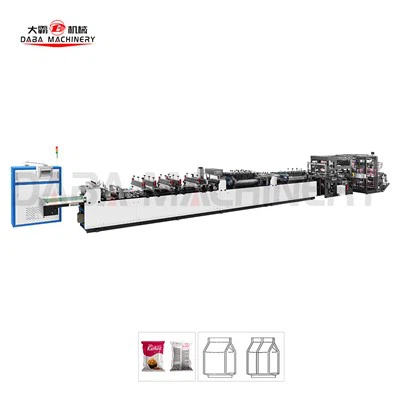
So, don’t hesitate to reach out to us. Let’s work together to optimize your coating process and take your production to the next level.
Flat Bag Making Machine References
- "Coating Technology Handbook" – A comprehensive guide on various coating methods and technologies.
- Industry reports on coating machine performance and trends.
- Case studies from different manufacturing sectors using coating machines.
Wenzhou Daba Machinery Co., Ltd.
With abundant experience, we are one of the most professional coating machine manufacturers and suppliers in China. We warmly welcome you to wholesale advanced coating machine at competitive price from our factory. If you have any enquiry about cooperation, please feel free to email us.
Address: Qianbu Industrial Zone, Xincheng Street, Ruian City, Wenzhou, China.
E-mail: info1@dabamachinery.com
WebSite: https://www.dabaflexpack.com/
