Hey there! As a supplier of Welding Wire Winding Machinery, I’ve seen firsthand how the winding speed can have a huge impact on the quality of the wound wire. Let’s dive into this topic and explore what’s going on. Welding Wire Winding Machinery

First off, let’s talk about what winding speed actually means. It’s basically how fast the wire is being wound onto the spool or bobbin. This speed can vary depending on a bunch of factors, like the type of wire, the size of the spool, and the specific requirements of the customer.
One of the most obvious effects of winding speed on wire quality is the tension of the wire. When the winding speed is too high, the wire can experience excessive tension. This can lead to all sorts of problems. For example, the wire might break during the winding process. Imagine having a long – running production line, and suddenly the wire snaps. It’s not only a waste of time but also of materials. Even if the wire doesn’t break, the high tension can cause it to stretch. Stretched wire might not have the same mechanical properties as the original wire. This can be a big deal, especially in applications where the wire’s strength and flexibility are crucial, like in welding.
On the other hand, if the winding speed is too low, the wire might not be wound tightly enough. Loosely wound wire can be a real headache. It can get tangled easily, which makes it difficult to use in subsequent processes. When the wire is tangled, it can cause jams in the welding equipment, leading to downtime and reduced productivity. And let’s not forget about the appearance. Loosely wound wire just doesn’t look as professional, which can be a turn – off for customers.
Another aspect to consider is the heat generated during the winding process. When the winding speed is high, more friction is created between the wire and the winding machinery. This friction generates heat. Excessive heat can have a negative impact on the wire’s properties. For some types of wires, high heat can cause annealing, which changes the wire’s hardness and ductility. If the wire becomes too soft due to annealing, it might not perform well in welding operations. It could result in poor weld quality, such as weak joints or excessive spatter.
The winding speed also affects the uniformity of the wire winding. A consistent winding speed helps to ensure that the wire is evenly distributed on the spool. If the speed fluctuates, the wire might bunch up in some areas and be too sparse in others. Uneven winding can make it difficult to feed the wire smoothly through the welding machine. This can lead to inconsistent welding results, with some parts of the weld being stronger than others.
Now, let’s talk about how we, as a Welding Wire Winding Machinery supplier, can help customers deal with these issues. Our machines are designed to allow for precise control of the winding speed. We understand that different types of wires have different optimal winding speeds. For example, thin wires usually require a lower winding speed to avoid breakage, while thicker wires can handle a higher speed.
Our machinery is equipped with advanced speed control systems. These systems can be adjusted according to the specific requirements of the wire being wound. This means that customers can achieve the perfect balance between speed and wire quality. We also provide training to our customers on how to operate the machinery effectively. Our technicians can help customers set the right winding speed based on the type of wire, the spool size, and the end – use application.
In addition to the speed control, our machines are built with high – quality materials and components. This ensures that they can operate at different speeds without causing excessive wear and tear on the wire. The smooth operation of our machinery helps to minimize the heat generated during the winding process, protecting the wire’s properties.
We’ve also done a lot of research and development to improve the winding technology. Our latest models are designed to reduce the chances of wire breakage and uneven winding. They use advanced sensors to monitor the tension and speed of the wire in real – time. If there are any deviations from the set parameters, the machine can automatically adjust the speed to ensure consistent quality.
So, if you’re in the market for Welding Wire Winding Machinery, it’s important to consider the impact of winding speed on wire quality. Our machines are designed to give you the best of both worlds – high – speed production without sacrificing the quality of the wound wire.
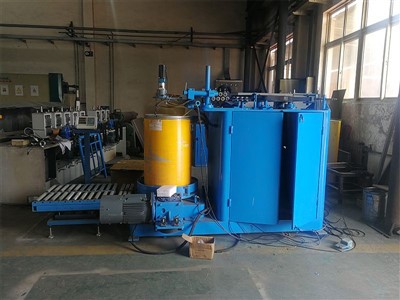
If you’re interested in learning more about our Welding Wire Winding Machinery or have any questions about how the winding speed affects wire quality, don’t hesitate to reach out. We’re here to help you make the right choice for your business. Whether you’re a small – scale welding shop or a large – scale manufacturing plant, we have the solutions to meet your needs.
Welding Wire Winding Machinery References:
- Industry reports on welding wire manufacturing processes
- Technical studies on the relationship between winding speed and wire properties
Three Water Machinery Co., Ltd.
Three Water Machinery Co., Ltd. is one of the most reliable manufacturers and suppliers of welding wire winding machinery in China. With abundant experience, we warmly welcome you to buy advanced equipment for sale here and get quotation from our factory. Contact us for more details.
Address: No.15, Jiaye Road, Liuanzhuang Industrial Park, Beichen District, Tianjin, China
E-mail: sales@eqet.com
WebSite: https://www.eqet.com/
