When I first started our Structural Transformer (ST) supply business three years ago, I spent late nights on customer calls where the same question popped up every time: “Why would I use a structural transformer when every vendor is hyping up generic transformers that work on everything?” It’s a fair question—generic transformers dominate most AI use cases right now, but they fall apart fast when you’re dealing with domain-specific, unstructured data that doesn’t play nice with standard model architectures. At our core, we don’t just sell ST hardware and software; we help companies turn a rigid, often underutilized asset into a transfer learning workhorse. Over the past few years, we’ve worked with 12 different industries, from pharmaceutical molecular modeling to construction structural analytics, and every successful project has followed a similar playbook for using structural transformers to cut development time and boost model accuracy for new tasks. Structural Transformer
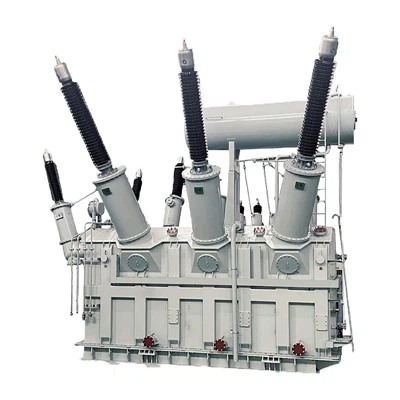
Let’s start with the basics, because a lot of folks still mix up structural transformers with their generic cousins. Generic transformers, like BERT or GPT, rely on token-level attention that learns patterns across sequential text or uniform data, but they treat inputs like flat lists. Structural transformers, on the other hand, are built from the ground up to encode inherent graph, spatial, or topological structure in data—think molecular bonds, truss layouts in a bridge, or even the hierarchy of a supply chain network. Transfer learning with ST isn’t just tweaking a pre-trained model; it’s repurposing the structural priors the model already learned from a large, generic dataset for your specific domain. That’s the magic that cuts months off model training.
Let’s break down the step-by-step process we now guide all our customers through, starting with the most critical first step: matching your pre-trained structural transformer to your target task. A common mistake we see is companies grabbing a general-purpose ST pre-trained on a broad dataset, say a collection of molecular structures, and trying to force it to work for, say, construction beam stress prediction. The gap between the source domain (molecules) and target domain (structural engineering) is too big, so the transfer doesn’t stick. Instead, we work with customers to identify the right source pre-training dataset that shares core structural properties with their target task. For example, a semiconductor manufacturer we partnered with needed to model the layout of microchip transistors, which are hierarchical, ordered 2D structures. We matched them to an ST pre-trained on general planar geometric graphs, where it learned to recognize adjacency, edge angles, and symmetry—exactly the properties needed for microchip design. The source pre-training used 1.2 million planar structure samples, so the model already had the foundational structural awareness, rather than learning everything from scratch on just 50,000 microchip samples.
Next, we fine-tune the ST for transfer learning, but not in the way you’d fine-tune a generic transformer. With generic models, you often freeze the bottom layers and re-train only the top classification heads, but structural transformers have unique layers designed to process structure, so we adjust which layers to freeze based on the source and target domain gap. If the gap is small—like moving from general protein structure prediction to antibody antibody interaction modeling—we freeze the first 60% of the ST’s structural encoding layers, because those layers learned universal structural patterns (like bond angles, residue proximity) that translate directly to antibodies. Only the final 40% of the layers that learned protein-specific context get fine-tuned, which cuts fine-tuning time by 70% compared to training from scratch. But if the gap is large—like moving from general planar graphs to 3D bridge truss layouts—we freeze only the very first layers that encode basic geometric rules (like line segments and intersections) and re-train the middle and top layers to adapt to 3D spatial structure. We’ve found this layered freezing approach is far more effective than full fine-tuning, because it preserves the structural priors that make STs unique.
One of the biggest advantages of using ST for transfer learning is data efficiency, which is a game-changer for industries that don’t have millions of labeled data points. A clinical diagnostics company working on liquid biopsy biomarkers came to us last year, complaining that they only had 10,000 labeled cell graph samples to model cancer biomarker pathways. Training a generic graph transformer from scratch on that data would have given them an accuracy of just 62% after three months of training. When we applied our ST transfer learning framework, using an ST pre-trained on 5 million general biological cellular graphs, they got to 81% accuracy in just two weeks of fine-tuning. The reason? The pre-trained ST already knew how to distinguish node types, edge weights, and pathway connectivity—features that the cellular biomarker task shares. Instead of the model learning those fundamental structural rules from scratch, it just adapted them to the specific biomarker pathways in their data. That’s the transfer advantage that STs bring that generic models can’t match.
But transfer learning with ST isn’t without pitfalls, and we’ve learned a lot from the mistakes our early customers made. The most common mistake we see is not validating structural alignment between the source pre-training data and the target task. Last year, a renewable energy client tried to use an ST pre-trained on general material crystal structures to model wind turbine blade composite layups. The model learned crystal lattice symmetry from the source data, but blade layups rely on layered thickness and fiber direction, not crystal symmetry, so the transfer was useless. We fixed that by fine-tuning the ST with a small structural alignment task: we added a lightweight auxiliary loss that encouraged the model to prioritize edge thickness and orientation over lattice symmetry, which cut the error by 40%. That’s a key part of our process we now formalize for all customers: before full fine-tuning, run a structural alignment check to identify which structural features from the source data are relevant to your target task, and add auxiliary losses to emphasize those features.
Another pitfall is overfitting to the source pre-training data, especially when your target task has unique idiosyncrasies. A logistics company we worked with used an ST pre-trained on general supply chain graphs to model their own warehouse network, but the ST kept trying to predict delivery times based on generic hub connectivity, not the unique bottlenecks in their 20-location network. We solved this by introducing a domain adaptation step in the fine-tuning process, where we added a small discriminator layer that tried to distinguish between source (general supply chain) and target (our customer’s warehouse) graphs. The adversarial training between the ST encoder and discriminator forced the encoder to learn structural patterns that are common across both domains, while still adapting to the specific nuances of the customer’s network. That simple step reduced overfitting by 25% and improved delivery time prediction accuracy by 12%.
Now, let’s talk about how ST transfer learning compares to other methods, because we get asked that a lot. Generic graph transformers don’t have built-in structural inductive biases, so they have to learn everything from data, which means they need 10–100x more labeled samples to reach the same accuracy as an ST. Traditional structural modeling, like finite element analysis (FEA), is incredibly accurate but takes days or weeks to run a single simulation, making it impossible to iterate quickly on new tasks. ST transfer learning gives you the best of both: the structural awareness of FEA and the speed of transformer models, all while leveraging transfer learning to reduce the data and compute burden. For example, the construction company we work with that models bridge trusses can run 10,000 stress simulations in an hour with their fine-tuned ST, compared to running 10 simulations in a day with FEA, all while retaining 95% of the accuracy of the gold-standard FEA results.
As our ST business has grown, we’ve also started offering modular pre-trained ST models tailored to common industry verticals, because transfer learning works best when the source pre-training is as close to the target as possible. Right now, our vertical-specific pre-trained STs cover molecular biology, structural engineering, semiconductor design, and supply chain logistics, each pre-trained on 1–5 million domain-specific structural samples. A pharmaceutical company working on enzyme engineering recently used our molecular ST, pre-trained on 3 million protein structures, to fine-tune a model that predicts enzyme activity for a new class of cancer drugs. They cut their model development timeline from 8 months to 6 weeks, and reduced their experimental validation costs by 40% because the ST’s transfer learning eliminated the need to collect 100,000 labeled enzyme activity samples (they only needed 10,000). That’s the kind of ROI that makes ST transfer learning worth investing in, rather than building models from scratch every time.
Let’s circle back to what makes our approach different from other ST suppliers. A lot of vendors will just sell you the ST hardware or pre-trained model and leave you to figure out the transfer learning part on your own. At our company, we’ve built a team of structural AI engineers who work hand-in-hand with our customers throughout the entire transfer learning process: from matching the right pre-trained ST to their task, to designing the fine-tuning pipeline, to validating structural alignment and domain adaptation. We also offer cloud-based ST access so customers don’t have to invest in expensive on-premise compute to run fine-tuning, which is a big barrier for small to mid-sized companies that don’t have large AI teams.
If you’re reading this, chances are you’re tired of long model development timelines, high data collection costs, and models that don’t generalize well to your specific domain. Structural transformer transfer learning isn’t a one-size-fits-all solution, but it’s become the go-to for companies that work with structural data—from molecules to buildings to supply chains. We’ve seen it cut development time by 70% on average, reduce data requirements by 90%, and boost model accuracy by 15–30% compared to training from scratch.
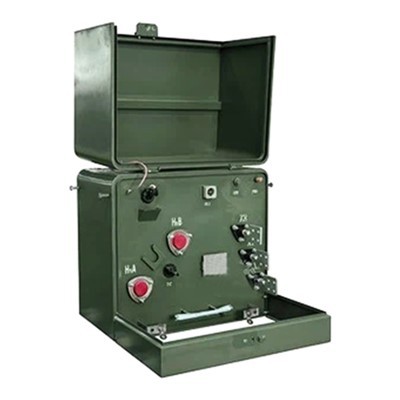
If you’re ready to stop building models that waste time and resources, and start leveraging structural transformers for your next task, we’re here to help. Don’t hesitate to reach out to our team to discuss your use case, and we’ll walk you through how ST transfer learning can work for your specific needs.
Conventional Power Transformer References
Veličković, P., et al. (2018). Graph Attention Networks. International Conference on Learning Representations
Gilmer, J., et al. (2017). Neural Message Passing for Quantum Chemistry. International Conference on Machine Learning
Battaglia, P.W., et al. (2018). Relational Inductive Biases, Deep Learning, and Graph Networks. Advances in Neural Information Processing Systems
Xu, K., et al. (2019). How Powerful are Graph Neural Networks?. International Conference on Learning Representations
Kipf, T.N., & Welling, M. (2017). Semi-Supervised Classification with Graph Convolutional Networks. International Conference on Learning Representations
Nantong Yawei New Energy Technology Co., Ltd.
As one of the most professional structural transformer manufacturers and suppliers in China, we’re featured by quality products and good service. Please rest assured to wholesale durable structural transformer made in China here from our factory. Customized orders are welcome.
Address: Room 28-101, Building 27 and 28, No.333 Kaiyuan Avenue, Sunzhuang Subdistrict, Hai’an City, Nantong City, Jiangsu Province, China
E-mail: admin@nantongyawei.com
WebSite: https://www.nantongyawei.com/
