Hey guys, if you’re running a commercial or engineering truck fleet, you know your truck’s suspension is basically the unsung hero of every job—whether you’re hauling 80,000 lbs of gravel over a potholed construction site, or navigating a muddy logging road at 2 a.m. As someone who’s spent the last 12 years supplying parts to truck operators like you, I’ve lost count of how many times a bad shock absorber has turned a routine run into a headache that costs time, money, and even safety. Today, let’s cut through the jargon and break down the main shock absorber types for these big workhorses, plus what makes each one perfect (or not) for your specific line of work. No stuffy engineering textbooks here—just real talk from someone who’s stood next to a semi at 5 a.m. troubleshooting parts. Commercial and Engineering Trucks

First, let’s get one thing straight: when people say “shock absorber,” they’re usually talking about the device that controls your truck’s suspension springs, right? It’s not just about making the ride smoother for the driver (though that’s a bonus). For commercial and engineering trucks, shocks keep the tires planted on the road or worksite—critical for stopping in time, not bouncing so bad you spill your load, and keeping every component from wearing out 2x faster than it should. Skip the cheap ones, and you’ll be replacing u-joints, tires, and even frames way sooner than you need to.
First up on the list: Twin-Tube Hydraulic Shocks. This is the OG workhorse, the one you’ll find on 7 out of 10 local dump trucks and utility vehicles I supply. Let me break down how they work without confusing you: it’s two tubes inside each other. The inner tube has that oil and a piston, and the outer tube is just a reservoir to hold extra oil and gas (wait, gas—don’t worry, it’s not explosive, it’s just nitrogen to stop the oil from foaming when you’re bouncing over rocks). Why do these work great for engineering and commercial trucks? They’re affordable, easy to replace, and they do a solid job for light to medium loads. I see them used all the time on trucks that do daily runs to job sites, hauling construction tools or pallets of brick. The downside? If you’re driving super rough terrain (like unimproved mine roads or deep mud), they can overheat fast, and the oil starts foaming, which makes them stop working. Not ideal for heavy-duty off-road stuff. But if your truck’s on the road most days with occasional worksite detours, twin-tube is a no-brainer. I keep a stock of these for all my regular clients because they’re reliable and won’t break the bank for routine replacements.
Next, a step up for the rough stuff: Mono-Tube Gas-Charged Shocks. These are the ones you want when you’re really pushing your truck—think logging trucks, heavy haulers moving equipment across worksites, or concrete mixers bouncing over uneven construction zones. Instead of two tubes, mono-tube shocks have one big tube with a piston, oil, and that nitrogen gas separated by a floating piston. The biggest win here is heat dissipation: because the tube is larger, it sheds heat way faster than twin-tube, so even when you’re bouncing over rocks for hours, the oil doesn’t foam. That means consistent performance when you need it most. I had a client last year who ran a fleet of logging trucks in the Pacific Northwest—he was going through twin-tube shocks every 3 months because of the rough roads. Switched to mono-tube, and they’re only replacing them once a year. Game changer. The only catch? They’re a bit pricier, and they’re a little longer, so you have to make sure they fit your truck’s suspension setup before you buy. No big deal, but it’s something to check if you’re swapping them out.
Now, let’s talk about the heavy hitter for the super tough jobs: Heavy-Duty Adjustable Shocks. These are for the guys who aren’t just hauling a load—they’re customizing their trucks for specific tasks. I supply these to specialized engineering fleets, like cranes that move heavy steel beams, or dump trucks that carry 100k lbs of material, or even fire trucks that need to respond fast over rough terrain. The best part here is you can adjust the stiffness on the fly—no tools needed for many models, some let you tweak it from the driver’s seat. If you’re switching between hauling empty back and fully loaded on the same day, this is perfect. Empty, you crank it a little softer for a smoother ride; loaded, you stiffen it up to keep the suspension from sagging too much. I had a client who runs a fleet of dump trucks that do both construction work in the city (smooth roads) and gravel hauling on rural roads (super rough). Adjustable shocks cut his shock replacement costs by 40% last year because he’s not forcing the same stiff setting on a light load, which wears them out faster. The downside? They’re the most expensive, and if you’re not changing the settings, they’re overkill. But if your truck does multiple different jobs, these are worth every penny.
Wait, there’s one more type I can’t skip, because it’s specific to a lot of commercial work: Cab Shocks (often called Cab Mounted Isolators). A lot of people forget that the big shock absorbers under the chassis aren’t the only ones—your truck’s cab has its own set of shocks, because sitting in a bouncing cab for 10 hours a day is a quick way to get back pain. For long-haul commercial trucks, these cab shocks are non-negotiable. I supply a lot of these to long-haul fleets that cross the country—drivers are putting 12 hours a day on the road, so a smooth cab makes all the difference. They work a little different than chassis shocks—they’re designed to absorb the high-frequency vibrations from the road, like the little bumps that make your coffee slosh, not just the big jolts. Cheap cab mounts, and drivers are showing up to job sites sore, which is bad for productivity. I’ve had clients tell me that switching to quality cab shocks cut their driver sick days by 15% in a year. For engineering trucks that have operators in the cab all day, that’s a huge win.
Now, let’s cut to the chase: how do you pick the right one for your truck? I get this question every single day, so here’s my quick cheat sheet. First, ask yourself two things: 1) What’s the average load my truck is carrying? 2) Where am I driving it 90% of the time? If you’re on paved or smooth dirt roads, hauling light to medium loads, go twin-tube. If you’re off-road 50% of the time or hauling heavy loads, mono-tube. If you switch between light and heavy loads, or do multiple different jobs, adjustable shocks. And never skip the cab shocks—no matter what, those will make your truck way more usable for the driver, and save you money on wear and tear long-term.
I also want to mention a few common mistakes I see truck operators make when buying shocks. First, buying cheap off-brand shocks just to save a few bucks. I had a client last year who bought shocks from a random online retailer for half the price of what I supply. They lasted 2 weeks, and when we pulled them off, the oil was leaking out, and the piston was bent. He ended up paying for the shocks plus labor twice, and even damaged a axle when the suspension went out. Second, not matching the shock to your truck’s suspension—some older models need specific length or mount types, and buying a generic one won’t fit right, leading to poor performance. And third, forgetting to replace shocks in pairs. Your suspension works as a team, so if one shock is bad, the other is probably not far behind. Replace both at the same time, and you’ll avoid uneven wear on tires and other parts.
As someone who’s been in this game for years, I know how frustrating it is when a part fails at the worst time—like when you’re halfway to a job site with a full load, and your truck starts bouncing so bad you can barely steer. That’s why I always emphasize getting parts from a supplier who knows commercial and engineering trucks, not just generic car parts. I test every shock I stock on actual work trucks, not just in a lab, because I want to know it will hold up when you’re counting on it.
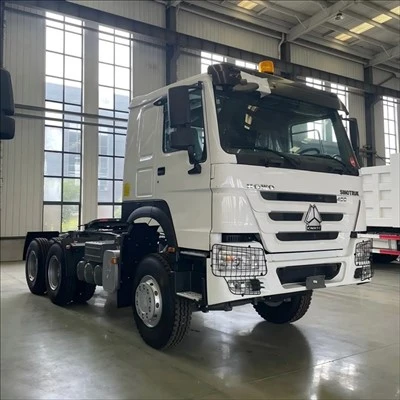
If you’re not sure what kind of shocks your truck needs, or you want to replace old worn-out ones, just reach out. We can talk through your specific setup, your typical routes, and your load, and help you pick the right shocks that won’t let you down. No hard sell, no confusing jargon—just real advice from someone who’s worked with these trucks long enough to know what works.
Tank Truck References:
- Commercial Vehicle Suspension Systems: Design, Function, and Maintenance. SAE International, 2021.
- Heavy-Duty Shock Absorber Performance Standards. Truck & Bus Manufacturers Association, 2022.
- Off-Highway Equipment Suspension Optimization. Construction Equipment Association, 2020.
- Driver Comfort and Long-Haul Truck Cab Isolation Systems. Journal of Commercial Transportation Engineering, 2023.
Jining Dafu Machinery Sales Co., Ltd.
As one of the most professional commercial and engineering trucks suppliers in China, we’re featured by quality products and low price. Please rest assured to wholesale bulk cheap commercial and engineering trucks from our factory. We also accept customized orders.
Address: Room 1-115, Building 7, Luxinan Auto Parts City, Qiantongdian Village, Quanpu Town, Liangshan County, Jining City, Shandong Province
E-mail: jiningdafu@163.com
WebSite: https://www.dafumachinery.com/
