Alright, so let’s cut to the chase: if you’ve ever shopped for industrial hoses, you’ve probably heard of NBR and HNBR—but mixing them up is like grabbing a soda when you need a energy drink: they’re both drinks, but one’s gonna let you down when things get intense. I’m a hose supplier, and I get asked this stuff at least three times a day, mostly by folks who’ve had a hose blow at a bad time (hello, cold morning truck breakdowns or factory line shutdowns). Let’s break this down like we’re geeking out in a parts room, no stuffy textbook jargon. HNBR Hose
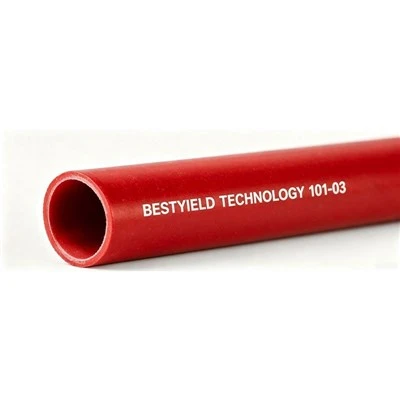
First, let’s start with the basics, no confusing acronyms yet. NBR stands for Nitrile Butadiene Rubber—think of it as the entry-level workhorse. You know those basic black hoses that handle regular oil, mild temps, and the occasional spill? That’s NBR. It’s been around for decades, cheap as chips, and does most of the boring, everyday stuff just fine. But here’s the catch: NBR has a sweet spot, and push it past that, and it turns into a cracked, stiff mess faster than your grandma’s phone battery at a holiday dinner.
HNBR? That’s Hydrogenated Nitrile Butadiene Rubber. It’s basically NBR that got a glow-up. Not the kind where you slap a new paint job on a old car—this is a chemical tweak that turns the weak double bonds in NBR’s structure into strong, saturated bonds. So HNBR is NBR with the rough edges filed down and a super suit added. But don’t take my word for it, I’ve seen NBR hoses fall apart in 6 months in industrial plants that run hot oil at 150°C, while our HNBR hoses are still going strong after 2 years.
Let’s get real about the stuff that matters, not just specs you’ll ignore at 8 a.m. in a plant: heat resistance is the big one. NBR tops out around 120°C (248°F) for continuous use, maxing out at like 150°C for short bursts. If you’re running a hydraulic line near a hot engine, or a fuel line on a heavy-duty truck in the desert? NBR will turn into a rubbery blob, or crack so bad it leaks oil all over the workshop floor. HNBR? We’re talking continuous use up to 150°C, and it can handle short spikes up to 180°C (356°F). That’s a 30°C edge, which doesn’t sound like much until you’re staring at a melted hose that shut down your entire assembly line.
Then there’s chemical resistance. NBR is great for mineral oils, regular fuels, and grease—stuff you find in a standard auto shop. But if you’re dealing with more aggressive chemicals? Like synthetic oils, biodiesel blends above B20, or even some hydraulic fluids used in construction equipment? NBR starts to swell, harden, or break down. I had a customer a couple months back who switched their farm equipment from regular diesel to B30 biodiesel, and their old NBR hoses started leaking within a week. They reached out, we swapped them for HNBR, and no more issues. HNBR handles those harsher chemicals way better, plus it’s more resistant to ozone and UV light, so if your hoses are sitting outside or exposed to sunlight, they won’t degrade in half the time NBR does.
Flexibility and lifespan are next. NBR gets brittle when it’s cold—drop it in a freezer or use it in an application where temps swing wildly, and it cracks when you bend it. HNBR stays flexible even at lower temps, down to like -40°C (-40°F), while NBR is lucky to hang on at -20°C (-4°F). And lifespan? NBR hoses usually last 1-3 years in normal conditions, while HNBR hoses are good for 5-10 years, depending on use. Yeah, they cost more upfront, but let’s do the math: a $20 NBR hose that lasts a year vs a $50 HNBR hose that lasts 5 years. That’s $100 vs $50 over 5 years—you save money long term, not to mention the lost downtime when your hose blows.
Wait, but when should you actually use NBR? I’m not saying NBR is garbage. It’s perfect for light-duty, low-stakes stuff: small residential hydraulic lines, lawn equipment, general purpose fluid transfer where temps and chemicals are mild. If you’re on a tight budget and don’t need the extra oomph, NBR works. But if you’re in heavy industry, automotive, aerospace, farm equipment, or any application where things get hot, aggressive chemicals, or long lifespan matters? HNBR is non-negotiable.
Let’s talk about real world examples, because numbers are boring. Last year, a local construction company brought in their excavator with a burst hydraulic hose. They’d been using NBR hoses because they were cheaper, but the hose blew mid-job, costing them an entire day of digging for a new water main. We replaced it with a HNBR hose, and they told me last month it’s still going strong. Another customer: a local trucking company that runs heavy-duty delivery trucks in the Arizona heat. They were going through NBR hoses every 2 months because of the high under-hood temps. Switched to HNBR, and now they only replace hoses once a year, if that. I’ve seen it time and again—HNBR solves the problems NBR can’t.
Is there a downside to HNBR? Sure, it’s more expensive, like I said, 2-3 times the cost of NBR. But that’s the trade-off. You’re paying for better performance, longer life, less downtime, less replacement costs. If you’re in a pinch for a cheap, short-term fix, NBR works. But if you want reliability, HNBR is the way to go.
A lot of people mix them up because they look almost identical. Both are black rubber hoses, same diameter usually. The only way to tell right away is to check the specs, or test them: stretch a small piece—HNBR is more durable, less likely to tear than NBR. Or dip a sample in hot oil—NBR will swell fast, HNBR barely changes. But don’t test your actual hoses on the job—trust the specs, or ask someone who knows (like me, obviously).
Here’s the thing I tell every customer: don’t buy based on price alone. I’ve seen way too many guys go for the cheap NBR hose, only to end up paying more in repairs and lost work. HNBR is an investment, not an extra cost. It’s designed for the tough jobs that NBR can’t handle. If you’re running anything that’s hot, chemical-heavy, or needs to last, HNBR is the hose you need.
At the end of the day, it’s not about which is better—it’s about which is right for your application. If you’re just doing small, light work, NBR is fine. But if you’re in heavy industry, trucks, equipment that runs hard? Skip the NBR, go for HNBR, and save yourself the headache of hose leaks and breakdowns.
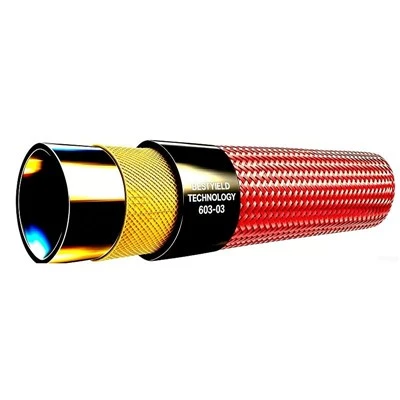
If you’re not sure which hose you need, or you’re tired of replacing hoses every few months, hit me up. We can talk through your application, send you samples, and get you set up with the right hose for your needs, no pressure. No jargon, no sales pitches—just straight talk about what works.
Pre-formed Rubber Hose References:
- National Institute of Standards and Technology. (2018). Rubber Materials for Industrial Hose Applications. NIST Special Publication 1198.
- Society of Automotive Engineers. (2020). Performance Specifications for HNBR and NBR Hydraulic Hoses. SAE International J200.
- Rubber Division, American Chemical Society. (2019). Advanced Elastomers for High-Temperature Fluid Transfer. Rubber Chemistry and Technology, 92(3), 457-489.
BESTYIELD Technology (Huizhou) Co., Ltd.
BESTYIELD Technology (Huizhou) Co., Ltd. is one of the most professional hnbr hose manufacturers and suppliers in China, featured by quality products and good price. Please rest assured to buy durable hnbr hose made in China here and get quotation from our factory. Customized orders are welcome.
Address: Yinshan Industrial Zone, Liangjing Town, Huiyang District, Huizhou City, Guangdong Province
E-mail: rick@bestyield.net
WebSite: https://www.bestyield.org/
