If you’ve ever stood in a manufacturing plant mid-shift watching a process veer off course—product quality slipping, energy bills climbing, output stalling for an hour—you know that small, unaddressed inefficiencies add up fast. As an instrumentation supplier, I spend most of my days talking to plant managers, process engineers, and operations leads who’re frustrated by exactly that: guesswork driving their decisions, blind spots in their lines, and a nagging sense that they’re leaving money on the table. The truth is, most of these pain points aren’t caused by outdated processes or lazy teams—they’re caused by a lack of clear, real-time data about what’s actually happening on the line—and that’s where instrumentation becomes the unsung hero of process optimization. Instrumentation

Let’s start with the basics: instrumentation is the network of sensors, transmitters, controllers, and analyzers that measure, monitor, and control every variable in an industrial process. That’s not just temperature and pressure (though those are the most familiar); it’s pH levels in a wastewater treatment tank, the concentration of a chemical in a pharmaceutical blend, the flow rate of raw materials feeding a food production line, even the vibration of a rotating pump that signals impending failure. Early process control relied on manual checks—operators walking the line with hand-held thermometers, logbooks, and a lot of guesswork. Today’s smart instrumentation turns those isolated, one-off readings into a continuous stream of data that lets teams tweak their processes in real time, cut waste, boost quality, and avoid costly downtime.
One of the biggest ways instrumentation drives optimization is by eliminating hidden waste—specifically, waste from overconsumption of energy, raw materials, and utilities. Take a food and beverage processing plant that makes bottled water. A few years ago, I worked with a plant that was using 12% more water per liter produced than the industry average. Their old system used a single flow meter to track total water entering the facility, but it couldn’t tell them where the excess was going. We installed ultrasonic flow meters on every major line: the raw water intake, the rinsing stations for bottles, the cleaning-in-place (CIP) loops for the filling lines, even the drainage points. Within a week, they spotted a leak in a CIP loop that had gone undetected for six months, and adjusted the flow control valves on the rinsing stations to use only the exact amount of water needed (instead of running full blast the whole time, regardless of how many bottles were in the queue). The result? A 9% drop in water usage, which added up to $140,000 in annual savings for that one line. That’s the power of instrumentation that doesn’t just measure—it pinpoints exactly where waste is happening.
Another key benefit is improved product quality, which in turn reduces rework and scrap—two of the largest hidden costs in processing. For a specialty chemical manufacturer, even a 0.2% deviation in chemical concentration can turn a full batch from usable to waste. Their old system used manual lab tests every four hours, which meant a batch could be out of spec for two hours before anyone knew. We installed in-line near-infrared (NIR) analyzers that measure chemical composition continuously, transmitting data directly to the plant’s distributed control system (DCS). Now, when concentration starts to drift by 0.1%, the controller automatically adjusts the feed rate of the raw material, no manual intervention needed. Since implementing that system, their scrap rate dropped by 11%—that’s 11 fewer batches per year going to landfill, and $220,000 in saved raw material costs. What’s more, consistent quality means happier customers, less product return, and a stronger reputation for reliability—benefits that go straight to the bottom line.
Instrumentation also is critical for predictive maintenance, a big part of optimizing process uptime. Unplanned downtime costs industrial plants an average of $260,000 per hour, according to recent industry data. A lot of that downtime is avoidable: pumps, motors, and valves wear out slowly, and instrumentation can pick up on small changes before a failure happens. For example, vibration sensors installed on centrifugal pumps can detect early signs of bearing wear—long before the pump starts making noise or stops working. Pressure transmitters on filter systems can monitor differential pressure, telling you when a filter is clogged and needs to be changed, instead of waiting until flow drops and halts production. We worked with a power generation plant that was replacing one of its main feed pumps every two years on a scheduled maintenance plan. By adding vibration and temperature sensors, they were able to adjust their maintenance schedule: they inspected the pump, and found it could safely run for an extra 18 months. That cut their pump replacement costs by 40% and eliminated two unplanned shutdowns when they caught early warning signs of a seal failure. Predictive maintenance isn’t just about avoiding breakdowns—it’s about aligning maintenance with actual need, not arbitrary schedules, which saves time and money.
But here’s the thing about instrumentation that many people miss: it’s not just about adding more sensors. It’s about integrating those sensors with the plant’s control and data systems to create a closed-loop process. A single temperature sensor won’t do much if the operator is in another office and doesn’t get an alert when it’s too high. But when that sensor is connected to a controller that can automatically adjust a steam valve to lower the temperature, and send a text alert to the maintenance team if the valve starts to fail, that’s when optimization happens. Modern smart instrumentation also comes with cloud connectivity, so teams can monitor processes from anywhere—whether they’re on the shop floor, in a home office, or traveling. That’s been a game-changer for remote teams, who can now spot a drift in process variables before it becomes a problem, instead of waiting for an operator to call in with an issue.
Of course, no technology is perfect, and instrumentation does have its limitations if it’s not deployed right. That’s why, as a supplier, we don’t just sell sensors—we work with our clients to design instrumentation systems that fit their specific process, not a one-size-fits-all template. For example, a food processing plant can’t use the same pH sensor as a pharmaceutical plant; food-grade sensors need to be easy to clean and resistant to common cleaning chemicals, while pharmaceutical sensors need to meet strict regulatory standards like FDA 21 CFR Part 11. A water treatment plant needs sensors that can handle corrosive chemicals and high pressure, while a textile plant needs flow meters that work with thick, viscous dyes. We also provide ongoing calibration and maintenance services, because a sensor that’s not calibrated is just a fancy paperweight. A flow meter that’s off by 5% can create all the same waste as no flow meter at all.
Looking ahead, instrumentation is only going to play a bigger role in process optimization as industries face more pressure to reduce their carbon footprint. Smart energy management relies on accurate measurement of energy use across every part of a plant, and instrumentation is the only way to get that data. For example, a steel mill using thermal imaging cameras (a type of infrared instrumentation) to monitor furnace temperatures can adjust their fuel use to cut emissions by 10% while maintaining production output. That’s optimization that’s good for both the plant’s bottom line and the environment, which is becoming more important for customers and regulators alike.
If you’re looking to optimize your process—whether it’s cutting waste, boosting quality, reducing downtime, or lowering energy costs—the first step is to stop relying on manual checks and outdated data. Instrumentation isn’t just a capital expense; it’s an investment that pays for itself in savings, improved productivity, and long-term process reliability.
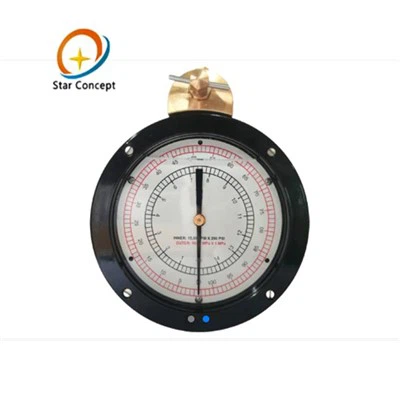
We’ve helped dozens of plants across industries from pharmaceuticals to food and beverage, power generation to chemical manufacturing, identify blind spots and turn data into action. If you’re ready to take the guesswork out of your process and start optimizing for real results, we’d be happy to talk through your specific needs and how instrumentation can help you reach your goals.
Instrumentation Reference
- “2024 Estimate of Manufacturing Downtime Costs,” Industry Week, available in print.
- “Smart Instrumentation for Process Optimization,” ISA Transactions, 2023, Volume 131.
- “Waste Reduction in Industrial Processes via Real-Time Sensing,” Journal of Cleaner Production, 2022, Volume 365.
- “Predictive Maintenance for Rotating Equipment,” IEEE Transactions on Industrial Informatics, 2021, Volume 17, Issue 8.
Dongying Star Concept Petroleum Equipment Co., Ltd.
We are one of the most professional instrumentation manufacturers and suppliers in China. With abundant experience, we warmly welcome you to buy durable instrumentation made in China here from our factory. Good service and quality products are available.
Address: No. 9 Xisi Road, Dongying City, Shandong Province, China
E-mail: ellen@starconcept.cn
WebSite: https://www.star-cementing.com/
