If you’ve ever stood in front of a 12th-century cathedral with stained-glass windows glowing through stone arches or a turn-of-the-century brick warehouse with terracotta tiles weathered by a hundred winters, you know those buildings aren’t just structures—they’re pieces of our collective story. As an inspection drone supplier who’s spent the last seven years working with historic preservation teams, architects, and cultural heritage organizations across North America and Europe, I’ve lost count of how many times someone’s asked me: “Can inspection drones really be trusted for this? Old stone, fragile plaster, ornate cornices—isn’t that too delicate for something that flies?” Inspection Drone
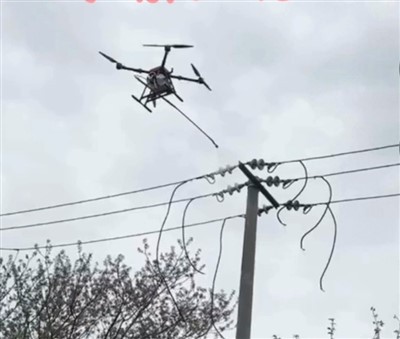
The short answer is yes. The longer answer is that drones aren’t just “flying cameras” for historic building inspections. They’re precision tools designed to solve problems that have stumped heritage professionals for decades, and they’re changing how we protect our most irreplaceable landmarks. Let me walk you through how this works, what we’ve learned in the field, and why more preservation teams are trading scaffoldings and cherry pickers for drones.
The Problem With Traditional Historic Building Inspections
For most of the 20th century, inspecting a historic building meant one thing: access. To see the crack in a 13th-century church’s apse, the loose terracotta tile on a 1920s landmark’s roof, or the water damage behind a carved stone gargoyle, you had to build scaffolding that wrapped around the entire structure. Scaffolding for a large cathedral can take weeks to assemble, costs tens of thousands of dollars, and risks damaging delicate surfaces if workers aren’t extra careful. For smaller buildings—like a 1880s clapboard mansion with a steep gabled roof—renting a cherry picker might be the only option, but even that can’t reach the small, hard-to-access spots where rot or pest damage often starts.
I remember one job five years ago with a team inspecting a Gothic revival church in upstate New York. They’d already spent $12,000 on scaffolding to reach the upper nave walls, and they were only halfway done. Half the budget was gone before they even found a 2-foot crack in a decorative stone buttress that would have gone unnoticed for another year—if not longer. That’s when the preservation lead turned to me and said, “Your drones could have saved us half this cost, and given us a clearer look without scuffing the stone.”
How Drones Work For Historic Building Inspections (The Science Part)
Let’s get specific about the technology that makes this possible. Our inspection drones aren’t the same as the consumer models you might see at a beach or a concert. We use custom-built platforms with multi-spectral cameras, high-resolution zoom lenses, and thermal imaging sensors—all calibrated to avoid damaging historic materials.
First, flight autonomy is non-negotiable here. We pre-map every inspection site using photogrammetry software that builds a 3D model of the building before the drone even takes off. This means the drone flies a pre-programmed path at a consistent altitude and angle, so we capture every surface without hovering too close (which could disturb dust, trigger loose debris, or scratch fragile finishes). For example, when inspecting a marble facade, we set the drone to fly 1.5 meters away from the stone at a 10-degree downward tilt—close enough to capture 1mm-level details, but far enough that even a gust of wind won’t push it into the wall.
Thermal imaging is another game-changer most people don’t think about. Water damage in historic buildings is often invisible to the naked eye— it seeps into stone, hides under plaster, and rots wooden beams from inside out. Our thermal cameras pick up temperature differences: wet stone is colder than dry stone, and a waterlogged wooden support will show a distinct thermal signature compared to its dry neighbors. On a job last year with a preservation group in Quebec, thermal scans on a 17th-century stone manor found three separate hidden water leaks in the roof that the traditional team had missed after two weeks of manual inspections. Those leaks were feeding rot into the manor’s original chestnut beams—if we’d waited another year, those beams would have needed full replacement instead of targeted repairs.
We also use LiDAR (Light Detection and Ranging) for more complex projects. LiDAR shoots millions of laser points per second to map every inch of a building, including the parts that are hidden by overgrown ivy, scaffolding, or even fine mist. Last year, we worked on a 19th-century lighthouse in Maine where the upper exterior was covered in thick poison ivy. Instead of pulling the vines down (which could damage the cast-iron and limestone below), our LiDAR drone mapped the entire exterior in 20 minutes, creating a 3D model that showed every corroded spot on the lighthouse’s iron supports without touching a single leaf.
Real-World Wins: No More Damage, Faster Results, Clearer Data
I don’t just talk theory here—let’s talk about the numbers, because that’s what moves preservation teams. In our client reports over the last three years, inspection drones have cut historic building inspection time by an average of 70% and reduced associated costs by 55%. But the biggest win isn’t money or speed—it’s protecting the buildings themselves.
Last year, we worked on a 1905 Beaux-Arts bank building in Chicago that’s on the National Register of Historic Places. The building’s terracotta roof had loose tiles that had been falling onto the sidewalk below— a safety hazard for the surrounding downtown area. A traditional inspection would have required a 100-foot cherry picker that would have closed part of the street for three days, disrupting local businesses and risking damage to the original terracotta (which is no longer manufactured, so replacement would be impossible). Our team arrived, flew the drone over the roof in 45 minutes, and captured high-resolution images that showed exactly 12 loose tiles and their locations. The preservation team used that data to schedule targeted repairs that only required scaffolding in two small spots, closing the street for just four hours and saving the building from having to replace irreplaceable terracotta.
Another example is a small 17th-century log cabin in Vermont that’s owned by a local historical society. The cabin’s walls were covered in chinking (a mixture of mud, straw, and hair that seals gaps between logs), and the society wanted to inspect for rot and insect damage. Traditional inspection would have meant stripping off the chinking from every wall—a process that would have ruined the original materials and taken months. Our drone’s thermal scans identified three small areas where moisture was trapped under the chinking, and the team only had to remove those 1-square-foot spots for repairs. The rest of the cabin’s original chinking and logs remained untouched, preserving a piece of early American history that would have been altered permanently if not for the drone.
The Caveats: Why Drones Aren’t A One-Size-Fits-All Solution
Before you think drones solve every historic building problem, I need to be clear about their limits. First, they can’t do structural load testing or sample material for lab analysis— for that, you still need a trained engineer on site. Second, sites with very low clearance (like buildings under power lines or in dense urban canyons with tall skyscrapers) might not be safe for drone flight, so we always do a pre-flight risk assessment before every job. Most importantly, drones are tools for data collection, not replacement for expert eyes. The images and scans we capture are analyzed by heritage architects and preservation specialists, not just our drone pilots— that’s how we make sure the data we deliver is actionable, not just pretty photos.
We also work closely with historic preservation guidelines from organizations like the National Trust for Historic Preservation and the International Council on Monuments and Sites (ICOMOS). Every drone flight plan is reviewed to ensure we’re not disturbing the site, and we follow strict protocols for cleaning our equipment before and after jobs to avoid bringing foreign materials (like pollen or dirt) onto the historic surfaces.
Looking Ahead: The Future of Drone Inspections for Heritage
The last six years have shown me that inspection drones aren’t just a temporary trend for the heritage field—they’re a permanent shift in how we care for old buildings. We’re already working with several universities to test AI-powered software that can automatically identify crack sizes, water damage, and material degradation from drone scans, which will cut down the time between data collection and actionable reports even more. We’re also developing smaller, lighter drones that can fly indoors to inspect high historic ceilings, stained-glass windows, and upper gallery areas where even cherry pickers can’t reach.
But at the end of the day, what matters most is that we’re giving preservation teams better tools to protect buildings that would otherwise be too expensive or risky to inspect. The cathedral in upstate New York I mentioned earlier—after our scan, they fixed the buttress crack and caught three more small issues before they became major problems. Last year, I got an email from their preservation lead: “We would have never seen that crack without your drone. It would have fallen in a year, and that would have been a disaster.”
Fixed Wing Drone That’s why I do this. Historic buildings aren’t just old walls—they’re where we come from, and they need to be cared for so future generations can experience them too. If you’re part of a historic preservation team, architect, or property manager working on a landmark, and you’re tired of the cost, time, and risk of traditional inspections, let’s talk. We can walk you through our process, show you case studies from similar projects, and figure out the right solution for your building. The goal isn’t to replace traditional methods—it’s to add a tool that makes preservation more accessible, more accurate, and safer for the buildings we all care about.
References
- International Council on Monuments and Sites (ICOMOS). (2020). Guidelines for the Use of Unmanned Aerial Vehicles in the Conservation of Cultural Heritage. Paris, France: ICOMOS International Scientific Committee for Digital Heritage.
- National Trust for Historic Preservation. (2022). Drone Applications for Historic Building Condition Assessments. Washington, D.C.: National Trust for Historic Preservation Technical Services Program.
- American Institute of Conservation. (2021). Thermal Imaging for the Detection of Hidden Damage in Historic Building Materials. Journal of the American Institute for Conservation, 60(2), 89-105.
- European Council of Spatial Planners. (2023). Drone Photogrammetry for Heritage Site Documentation and Condition Monitoring. Brussels, Belgium: European Council of Spatial Planners.
- U.S. Department of the Interior. (2020). Standards for Historic Building Inspections Using Unmanned Aerial Systems (UAS). National Park Service Heritage Preservation Services.
Shandong Lesong Drone Technology Co., Ltd.
As one of the most professional inspection drone manufacturers in China, our products have good reputation in the market. Please rest assured to wholesale high quality inspection drone for sale here from our factory. Good service and punctual delivery are available.
Address: Yuncheng County, Heze City, Shandong Province
E-mail: Ella36988@163.com
WebSite: https://www.china-uavfactory.com/
