Hey there! I’m working for a delta robot supplier. One of the most common questions we get from our customers is how our delta robots handle objects with different surface textures. It’s a great question, and I’m gonna break it down for you in this blog. Delta Robot
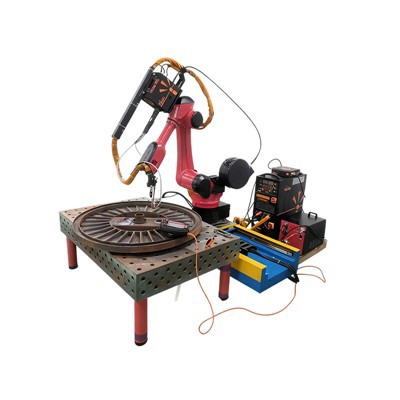
First off, let’s talk about what a delta robot is. It’s a type of parallel robot that’s super fast and precise. You’ll usually find them in industries like food packaging, electronics assembly, and pharmaceuticals. The cool thing about these robots is their ability to move quickly in three-dimensional space. They’ve got a unique design with three arms connected to a central base, which gives them that speed and agility.
Now, when it comes to handling objects with different surface textures, there are a few key factors at play.
Vision Systems
Our delta robots are often equipped with advanced vision systems. These are like the robot’s "eyes." The vision system can detect the size, shape, and position of the object, but it can also give us some clues about the surface texture. For example, a shiny, reflective surface might look different in the camera’s view compared to a matte or rough surface.
The vision system uses algorithms to analyze the visual data. If it’s dealing with a shiny object, it might adjust the pre-grasping path slightly to account for the potential for slippage. The robot can then use this information to decide the best way to approach and pick up the object.
End – Effectors
The end – effector is the part of the robot that actually touches the object. It’s like the robot’s "hand." We’ve got a variety of end – effectors available to handle different surface textures.
Vacuum Grippers
Vacuum grippers are pretty common. They work by creating a vacuum between the gripper and the object’s surface, which holds the object in place. For smooth, flat surfaces like glass or plastic sheets, vacuum grippers are a great choice. They can create a strong seal and lift the object without any issues.
But what about rough or porous surfaces? Well, that’s where things get a bit tricky. A rough surface might not allow for a perfect seal, which could lead to the object slipping. To overcome this, we’ve developed some specialized vacuum grippers with extra – soft sealing materials. These materials can conform to the irregularities of the rough surface and still create a decent vacuum.
Mechanical Grippers
Mechanical grippers use jaws or fingers to hold the object. They’re great for objects with a more solid structure and can be adjusted to handle different shapes and sizes. When it comes to surface textures, the design of the gripper fingers is crucial.
For smooth objects, we can use gripper fingers with a smooth, flat surface. This ensures a good contact area and reduces the risk of damage to the object. On the other hand, for rough or textured objects, we use gripper fingers with a serrated or grooved surface. These patterns increase the friction between the gripper and the object, making it easier to hold on.
Adaptive Grippers
Adaptive grippers are a relatively new innovation. They can change their shape based on the object they’re trying to grasp. This is especially useful for objects with complex or irregular surface textures.
Let’s say you’ve got an object with both smooth and rough patches. An adaptive gripper can adjust its shape to conform to the different textures. It might wrap tightly around the rough parts to increase grip and be more gentle on the smooth areas to avoid damage.
Force and Torque Sensors
Our delta robots are also fitted with force and torque sensors. These sensors can detect the amount of force the robot is applying to the object. When handling objects with different surface textures, this is really important.
For a soft, delicate object with a smooth surface, like a chocolate bar, the robot needs to apply just the right amount of force. Too much force could break the bar, and too little force could cause it to slip. The force sensor continuously measures the force during the grasping process and sends feedback to the robot’s control system.
If the object has a rough surface, the robot might need to apply more force to get a good grip. The force sensor helps the robot adjust the force accordingly, ensuring that it can hold the object securely without causing any damage.
Customized Programming
We don’t rely solely on hardware to handle different surface textures. Our team of engineers can also customize the programming of the delta robots.
If a customer has a particular type of object with a unique surface texture to handle, we can write a custom program. The program can include specific grasping strategies based on the results from the vision system, the type of end – effector being used, and the data from the force and torque sensors.
For example, if the object is a fragile ceramic bowl with a semi – rough finish, the program might tell the robot to approach the bowl slowly, use a specific type of mechanical gripper with a soft padding on the fingers, and apply a carefully calibrated force.
Real – World Examples
Let’s look at some real – world scenarios where our delta robots handle objects with different surface textures.
Food Industry
In the food industry, our robots are used to pick and place all sorts of goodies. Think of chocolate truffles with a smooth, shiny surface or pretzels with a rough, ridged texture.
For the chocolate truffles, we use vacuum grippers. The smooth surface of the truffles allows for a good seal, and the robot can gently pick them up and place them into packaging. The programming is set to ensure that the gripper applies just the right amount of force so as not to deform the delicate truffles.
When it comes to pretzels, we switch to mechanical grippers with serrated fingers. The rough texture of the pretzels requires a higher friction coefficient to hold them securely. The force sensors on the robot make sure that the gripper doesn’t crush the pretzels while still providing enough grip for transportation.
Electronics Industry
In electronics, our delta robots handle components like circuit boards. Circuit boards can have a variety of surface textures. Some areas might be smooth, while others have soldered components that create a rough surface.
For the smooth parts of the circuit board, a combination of vacuum grippers and precise programming is used. The vision system helps the robot accurately position the gripper, and the force sensor ensures that the board isn’t damaged during handling.
For the areas with soldered components, an adaptive gripper might be used. The adaptive gripper can adjust its shape around the components, providing a secure hold without dislodging any of the sensitive parts.
Benefits of Our Delta Robots in Handling Different Textures
There are several benefits to using our delta robots for handling objects with different surface textures.
First of all, they’re highly efficient. They can quickly adapt to different textures and handle a wide variety of objects, which means increased productivity in the production line.
Secondly, they reduce the risk of damage to the objects. Thanks to the advanced sensors and customized programming, the robots can apply just the right amount of force and grip, no matter the surface texture.
Finally, they’re flexible. We can easily swap out end – effectors and adjust the programming based on the customer’s needs. This makes them suitable for a range of industries and applications.
Nail Gun Robot If you’re in an industry where handling objects with different surface textures is a challenge, our delta robots could be the solution you’ve been looking for. We’d love to have a chat with you about your specific requirements and how we can customize our robots to meet them. Whether you’re in food, electronics, or any other field, our team of experts is here to help. So, don’t hesitate to reach out and start a conversation about how we can help your business boost its efficiency and productivity with our top – notch delta robots.
References
- Robotics: Modeling, Planning and Control by Bruno Siciliano, Lorenzo Sciavicco, Luigi Villani, and Giuseppe Oriolo.
- Industrial Robotics: Technology, Programming, and Applications by Peter M. Nichol.
Dongguan Chuanglida Intelligent Equipments Co., Ltd.
As one of the most professional delta robot manufacturers and suppliers in China, we also support customized service. Please feel free to buy discount delta robot in stock here from our factory. For price consultation, contact us.
Address: Room 201, Building 2, No. 61, Shachang 1st Road, Dalang Town, Dongguan City, Guangdong Province
E-mail: haoguangli001@outlook.com
WebSite: https://www.boruntestech.com/
