If you’ve ever stepped into a semiconductor cleanroom, a pharmaceutical manufacturing suite, or a biotech lab housing cell culture workstations, you’ve likely felt the quiet, consistent air flow of a Fan Filter Unit (FFU) at work. As an FFU supplier with over a decade in the industry, I’ve spent countless hours walking clients through the core of these systems: the filters that turn standard building air into contaminant-free, controlled airstream. Too often, buyers fixate on an FFU’s motor or overall footprint, only to realize later that the filter is the make-or-break component for their application. Today, I’m breaking down exactly what filters we use in our FFUs, why each matters, and how to match the right filter to your needs. FFU

First, let’s ground this in the basics: FFUs are self-contained units that pull in ambient air, filter it to remove 99.97% to 99.999% of airborne particles, and push it out at a uniform, low-velocity rate. Filters are the only part of that process that directly removes contaminants, so choosing the wrong one can derail everything from a Class 1 cleanroom’s certification to a vaccine’s sterility. At our company, we only use filters that meet global cleanroom standards, but not all filters are created equal—there are two primary types integrated into standard FFUs, and a few specialized variants for niche use cases.
The workhorse of every FFU is the HEPA filter, short for High Efficiency Particulate Air filter. If you’re in cleanrooms, this is probably the filter you’ve heard of; it’s the industry standard for most FFU applications, and for good reason. What makes HEPA filters so effective is their dense, mat-like structure of interwoven glass microfibers, each just a few hundred nanometers thick. Those tiny fibers work together through three primary filtration mechanisms that catch particles of all sizes, from 0.3 microns (the “most penetrating particle size,” or MPPS, the size that’s hardest to trap) down to 0.01 microns.
Let’s break those mechanisms down, because they’re why HEPA filters don’t miss critical contaminants: first, interception. As air flows through the filter, larger particles (like 1 micron dust or bacteria) bump into the microfibers and stick, rather than flowing around them. Then there’s impaction, which catches even larger particles—think 5 microns or more—with enough momentum that they can’t follow the air stream around the fibers, so they collide and stick. The third, and most surprising, mechanism for tiny particles is diffusion. Particles smaller than 0.1 microns move erratically via Brownian motion, bouncing around instead of flowing straight through the filter. That random motion makes them hit fibers even if they weren’t on a direct path, so they get trapped. Together, these three methods mean a properly functioning HEPA filter catches 99.97% of 0.3 micron particles, which is non-negotiable for most cleanroom, biotech, and pharmaceutical uses.
Our FFUs use two main HEPA variants, depending on the required cleanliness class. The first is the Standard HEPA filter, which meets the US Department of Energy (DOE) standard for H14, or the European EN 1822 H14 rating. This is the go-to for Class 5 to Class 7 cleanrooms (ISO 14644-1 classifications), which cover most pharmaceutical formulation areas, device assembly lines, and general lab cleanrooms. For more stringent applications, like semiconductor wafer fabrication (which often requires Class 1 or Class 2 cleanrooms) or aseptic drug filling, we use ULPA filters—Ultra Low Penetration Air filters. ULPA filters go a step further, capturing 99.9995% of 0.12 micron particles, which makes them essential for trapping viruses, submicron metal particulates from silicon etching, and other tiny contaminants that can ruin sensitive products. A lot of suppliers will cut costs by putting a lower-grade HEPA in an FFU for a high-stakes ULPA application, but we never do—we test every filter batch against our in-house particle counter before installation to make sure it hits its rated efficiency.
Now, for the other filter you’ll find in a typical FFU: the pre-filter. If HEPA filters are the workhorses, pre-filters are the unsung heroes that extend your HEPA’s life. Most people skip or skimp on pre-filters, but they’re critical for two big reasons. First, they catch large airborne contaminants before they reach the HEPA—things like lint, dust mites, skin cells, and even small debris from construction or warehouse storage. If a HEPA gets clogged with these particles, its airflow drops, your FFU becomes inefficient, and you’ll have to replace the HEPA far more often than necessary. Second, pre-filters reduce the load on your FFU’s motor, cutting energy costs and extending the motor’s lifespan.
We use MERV-rated pre-filters in all our FFUs, specifically MERV 8 or MERV 11, depending on the environment. MERV (Minimum Efficiency Reporting Value) ratings measure a filter’s ability to trap particles between 0.3 and 10 microns, with higher numbers meaning better efficiency. MERV 8 is perfect for general environments, like labs with moderate dust levels or manufacturing floors where the air isn’t heavily contaminated. For more dusty areas—like facilities with raw material processing, or labs that handle dry powder compounds—we recommend MERV 11 pre-filters, which catch 85% of 1 to 3 micron particles, more than doubling the HEPA’s service life. I always tell clients: the extra $50 for a MERV 11 pre-filter will save you hundreds in premature HEPA replacements down the line.
There are a few specialized filters we integrate into FFUs for unique applications, too, and it’s important to know when those are worth investing in. For example, if you need to remove gaseous contaminants—not just particles—like volatile organic compounds (VOCs) from cleaning solutions, or ammonia from lab fumes, we add a carbon filter layer, often called a combination HEPA-ULPA with carbon. These filters have activated carbon media that adsorbs gaseous pollutants, so they’re ideal for pharmaceutical cleanrooms that use solvent-based sanitizers, or research labs that handle organic chemicals. Another niche variant is the HEPA filter with a medical-grade surface coating, which kills bacteria and viruses that come into contact with it. These are used in biotech labs working with pathogens, or hospital isolation rooms that rely on FFUs for air circulation.
A common mistake I see as a supplier is clients assuming all FFU filters are interchangeable. That’s not true—filters are matched to the FFU’s airflow rate, frame size, and the application’s requirements. For example, a 2×4 FFU for a small biotech lab doesn’t need the same CFM (cubic feet per minute) rating as a 4×4 FFU for a large cleanroom, and using an underperforming filter in a high-CFM unit will let particles slip through. We test every FFU assembly before it leaves our warehouse: we measure airflow, pressure drop across the filters, and particle capture efficiency to make sure it meets the rating we promise. We also label each filter with its expiration date and efficiency grade, so clients can track when to replace it, which is a big deal for compliance—regulatory bodies like the FDA require cleanrooms to keep detailed records of filter performance and replacement.
Another thing to emphasize: filter replacement is not a one-size-fits-all task. Pre-filters should be checked every 3 to 6 months, depending on the environment, and replaced when the pressure gauge on your FFU shows a 20% increase from its baseline (that means the pre-filter is clogged, and airflow is dropping). HEPA and ULPA filters, by contrast, usually last 1 to 3 years, but that can vary wildly. I had a client last year in a semiconductor fab that used a MERV 11 pre-filter, and their HEPA lasted 28 months; another client in a very dusty industrial lab used a MERV 8 pre-filter, and their HEPA had to be replaced at 10 months. The pre-filter is the biggest variable here, which is why we always include a free pressure gauge and a guide to filter maintenance with every FFU we sell.
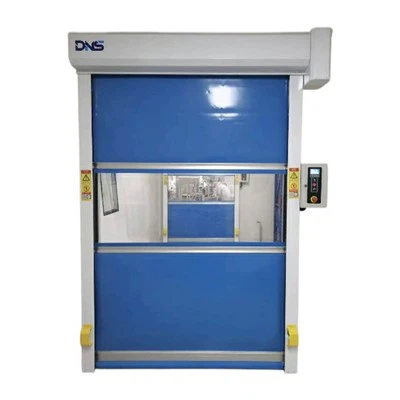
Fast Roll-up Door If you’re still unsure which filter is right for your FFU, don’t hesitate to reach out to our team for a custom recommendation. We work with clients across industries, from small startup labs to Fortune 500 manufacturing facilities, and we don’t push overpriced filters that aren’t necessary. Whether you need a standard HEPA for a small lab, a ULPA for a semiconductor cleanroom, or a combination filter with carbon for VOC removal, we can build an FFU that meets your exact needs. Contact our team to discuss your requirements, compare filter options, and get a quote tailored to your project.
References
- ISO 14644-1:2015, Cleanrooms and associated controlled environments — Part 1: Classification of air cleanliness.
- EN 1822:2019, High efficiency air filters (EPA, HEPA and ULPA).
- ASHRAE Standard 52.2-2017, Method of Testing General Ventilation Air-Cleaning Devices for Removal Efficiency by Particle Size.
- U.S. Department of Energy, “HEPA Filter Basics for Cleanroom Applications,” 2021.
Suzhou Denasi Intelligent Technology Co., Ltd.
Address: No. 898 Jinsheng Road, Jinjiaba, Lili Town, Wujiang District, Suzhou City, Jiangsu Province
E-mail: ChinaDenas@163.com
WebSite: https://www.densiclean.com/
